
NEW RELEASE · PROFESSIONAL REFERENCE
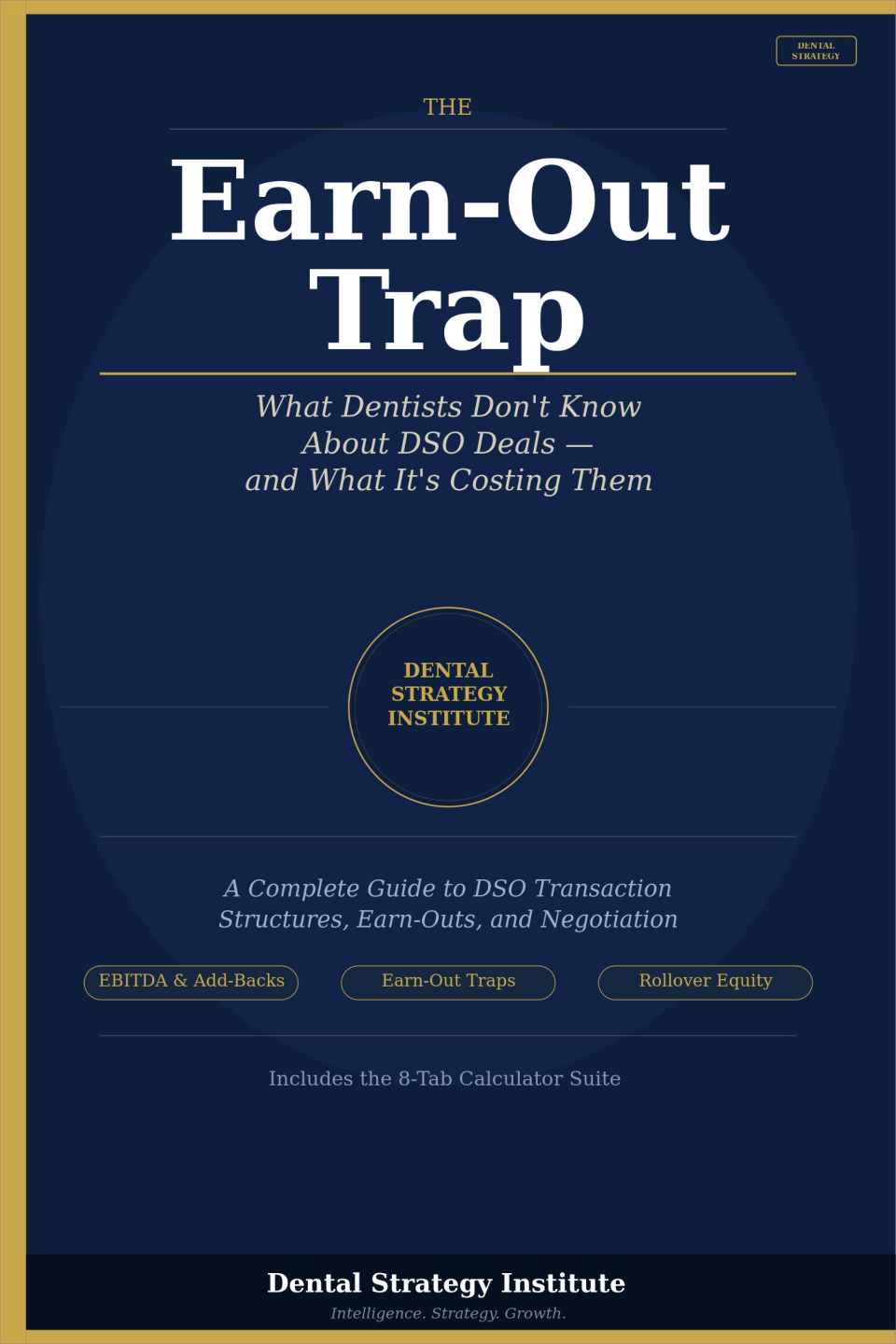
The Earn-Out Trap
What Dentists Don't Know About DSO Deals — and What It's Costing Them
SPECIAL OFFER - PDF BOOK AND CALC FOR ONLY $59 - SAVE $19!
One-time purchase · Instant download
Book PDF + 7-calculator Excel suite
18 chapters · 400+ pages Real-world transaction examples 7 companion Excel calculators
Non-compete enforceability by state Complete glossary · Bibliography · Index
THE PROBLEM
The DSO's deal team has done this hundreds of times.
Most selling dentists do it once.
Every year, dentists sign DSO transaction documents they don't fully understand. The earn-out sounds straightforward — until the DSO allocates corporate overhead to your practice P&L. The rollover equity sounds like upside — until you model the waterfall. The non-compete sounds reasonable — until you try to leave.
The information asymmetry in DSO transactions is profound and largely unaddressed. There are conference presentations on "maximizing practice value." There are no books that explain, clause by clause, what dentists are actually signing.
This is that book.
The documents you will sign are a set of four interlocking agreements. None of these four elements can be understood in isolation. Each one affects the others in ways that are rarely explained and almost never obvious.
— From Chapter 1
Every major provision. Plain language. Specific numbers.
-
How adjusted EBITDA is calculated — and how the buyer's Quality of Earnings team will systematically attempt to reduce it before closing
-
Why earn-outs fail — and the specific operational covenants, overhead caps, and dispute mechanisms that protect them
-
How the rollover equity waterfall actually works — and what your second-bite equity is worth after debt repayment, preferred return, and GP carry
-
What the non-compete costs you in dollars — and how to negotiate radius, duration, and enforcement before you sign
-
How to run a competitive process, what to lock down before any letter of intent, and when to consider alternatives to the DSO deal entirely
-
What to do when the deal goes wrong — your contractual remedies, the dispute process, and how to manage the earn-out period month by month
THE BOOK
18 chapters across five parts
PART I
The Anatomy of the Deal
PART II
The Negotiation
PART III
Due Diligence & Advisors
PART IV
Life After Close
PART V
Decision Framework
APPENDICIES
A–H Reference Materials
Glossary, EBITDA reference, non-compete by state, checklists, templatesWHAT'S AVAILABLE
The book and the tools to use it

The Earn-Out Trap $59

DSO Deal Calculator Suite $19
The guide the DSO's deal team never wanted you to have.
_________
Book PDF + 7-calculator Excel suite · Instant download
GET THE EARN-OUT TRAP01 EBITDA Normalizer Build your seller-side adjusted EBITDA before the buyer's QoE team arrives
Questions dentists ask before signing a DSO deal
It's a portion of your sale price that isn't paid at closing. It's contingent on the practice hitting specific financial targets, usually tied to EBITDA or collections, over a period after the sale. How that target gets calculated, and what can reduce it, is almost never explained clearly before signing.
Adjusted EBITDA applies specific add-backs and normalizations, like owner compensation and one-time expenses. The buyer's Quality of Earnings (QoE) team will systematically look for ways to reduce that adjusted number before closing, which directly affects your purchase price and your earn-out baseline.
It depends entirely on the capital stack above it. Debt repayment and preferred return come first, and your equity only sees a return after those are satisfied. Modeling your second-bite return at several different exit multiples shows what your equity is actually worth under different outcomes, not just the projection you were shown.
It depends on your state and the specific language in your agreement — enforceability varies significantly by jurisdiction. Knowing the state-by-state landscape and quantifying the dollar cost of your non-compete before you sign puts you in a much stronger negotiating position.
You should have your own advisors. The DSO's deal team represents the DSO's interests, and they've done dozens or hundreds of these transactions. Most selling dentists do this once — that imbalance is exactly what independent counsel and advisors are for.
No. This is educational content based on general transaction patterns, not personalized legal, financial, or tax advice for your specific deal. Work with your own attorney, CPA, and M&A advisor before signing any transaction documents.
Keep reading
- What Is a DSO Earn-Out? — why most dentists don't understand what they're signing
- How to Read a DSO Earn-Out Agreement — the five clauses that determine whether your earn-out pays out
- The Earn-Out Trap: Why Your DSO Deal Isn't Done Yet — the rolled equity problem and how to protect yourself