Protect the body that pays the bills.
Ergonomics, scope of practice in your state, and moves that keep you working for decades.
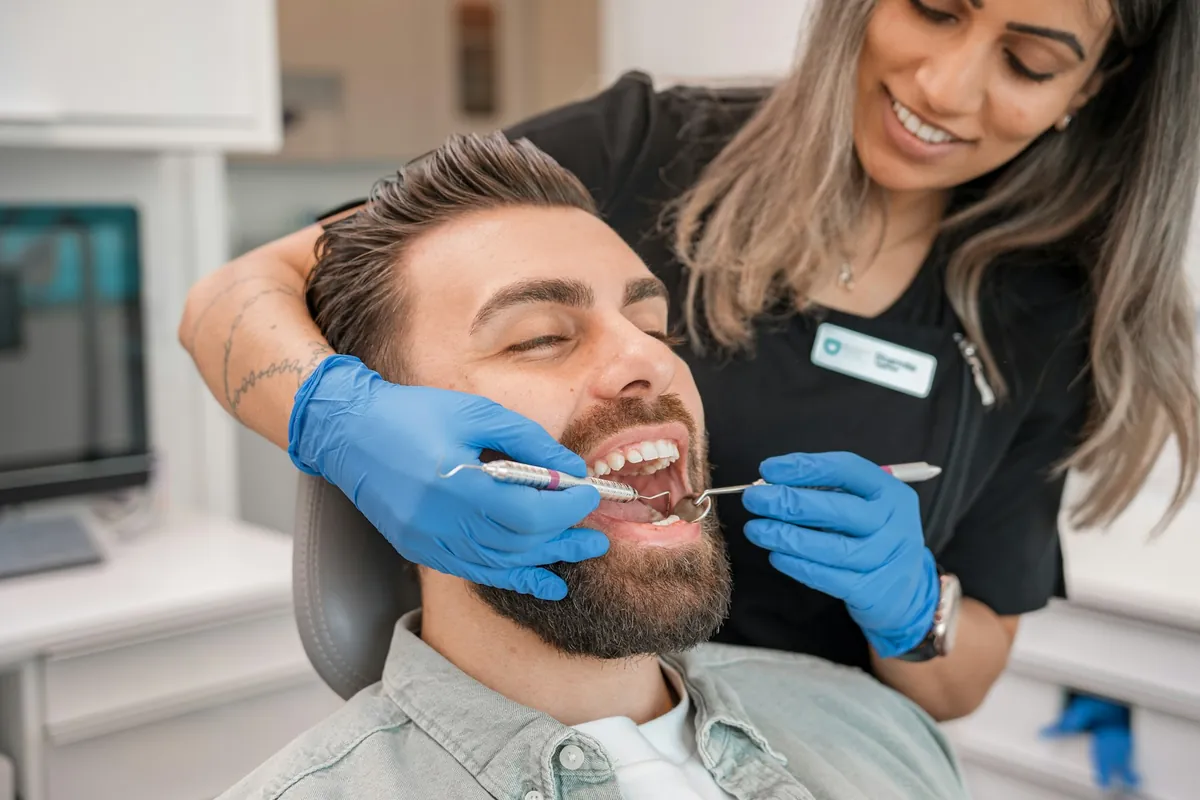
Somewhere around the ten-year mark, the body starts sending invoices. Stiff necks, sore shoulders, tingling hands after a long day. Most of it traces back to setups nobody ever questioned: a stool at the wrong height, a patient positioned for the dentist's convenience, loupes tilted a little off. Small fixes made early are far cheaper than big problems later.
This is also the stretch where options start to matter. Your state may allow more than your current office lets you do. Direct access, expanded duties, and independent practice rules have been shifting in many states, and it pays to know where yours stands before you need it.
Then there's the long view. A hygienist who works thirty years and saves steadily can retire comfortably, but only if somebody runs the numbers while there's still time to act. Four minutes with the Retirement Runway tool beats years of vague worry.
Run the numbers.
 Free · 4 minutes
Ergonomics Check
A quick self-check for the habits that wear out necks, shoulders, and wrists, with fixes for what it finds.
Open it → Free · 2 minutes
Scope of Practice by State
Supervision, direct access, and independent practice rules for all 50 states and DC.
Open it → Free · 4 minutes
Retirement Runway
See what you're on track to have, what you'd need, and what closes the gap.
Open it →Guides for where you are.
 Article
Dental Hygienist Burnout: What the Surveys Say and What Helps
Dental hygienist burnout: what recent surveys report, why numbers differ, what drives it per ADHA, and ways to match the fix to the cause.
Read it → Article
When Can a Dental Hygienist Retire? Social Security Ages and Ways to Wind Down
When can a dental hygienist retire? Social Security claiming ages and full retirement age, why many hygienists wind down hours first, and ways to taper.
Read it → Article
Become a Dental Hygiene Adjunct Instructor: What Schools Ask For and What It Pays
How to become a dental hygiene adjunct or clinical instructor: typical qualifications, what schools prefer, what the work involves, sample pay from postings, and how to start.
Read it →ArticleHygienist Neck and Shoulder Pain: What the Research Says and What to Change First
Musculoskeletal pain is common among dental hygienists in the research. Here is what the studies show, what they can't prove, and where to start.
Read it →ArticleHygienist Continuing Education by State: What Four Boards Require and How to Find Yours
North Carolina, California, Texas, and Florida compared from the boards' own rules, plus a checklist for finding your state's requirements.
Read it → Article
Why Your Neck and Wrists Go First: Ergonomics for Dental Hygienists
Hygienists report neck, shoulder and wrist pain at high rates. Here's what the research says, why it starts, and the ergonomic fixes worth trying first.
Read it → Article
How Much Should a Dental Hygienist Save for Retirement? The 2026 Numbers
2026 retirement limits for dental hygienists: 401(k), IRA and catch-up amounts, what 10 percent of a median hygiene income grows to, and what to do without an office plan.
Read it → Article
What Is Myofunctional Therapy, and Why Are So Many Hygienists Switching to It?
What is myofunctional therapy, and why are so many dental hygienists building a second career around it? A plain-language introduction to the specialty.
Read it → Article
Can Dental Hygienists Practice Independently? What Direct Access Actually Means
Can dental hygienists practice independently? A state-by-state look at what direct access laws actually allow — and where the misconceptions trip people up.
Read it → Article
The Federal Government Just Made It Easier for Your Dental Team to Save for Retirement—and It Costs Your Office Nothing
President Trump's Executive Order establishes TrumpIRA.gov, giving dental employees access to up to $1,000/year in federal retirement matching. Zero employer administration required. How Dentists can compete with DSO's.
Read it → Article
Dental Hygienists & Business Economics: Driving Practice Revenue
Hygiene drives 25–35% of a typical dental practice's production. Here's what that means for hygienists — in pay talks, in career moves, and in how you read your own schedule.
Read it →
Join the list. Be first to the new tools.
One friendly email now and then: new calculators, state-by-state updates, and career moves worth knowing about.