
Browse by Topic: DSO & M&A · Practice Operations · Hygiene Career Track · Practice Finance · Regulation & Compliance
Most equipment decisions get made on one number, the price at the bottom of the quote.
This piece gives you the other six. The worksheet below (free, in Excel, with the formulas showing) takes about ten minutes and tells you whether a new operatory adds to your retirement or costs it, using your own...
The same chair is a different purchase at 38, at 52, and at 61.
Here's the direct answer. The break-even on a staffed operatory barely moves with your age. It lands between about 2.5 and 2.7 added visits a week whether you're 38 or 61. What moves is everything around it: how much the room can add t...
A buyer pays for what your chairs produce.
Here's the direct answer. Practice valuations run mostly on collections and cash flow, and equipment sits inside that number as a supporting cast member. New equipment bought right before a sale rarely comes back dollar for dollar, though a room that's ful...
A tax deduction returns 24 to 37 cents on a dollar you've already spent.
Here's the direct answer. Under current law, most dental equipment can be written off in the year you put it in service, thanks to 100% bonus depreciation and a 2026 Section 179 limit of about $2.56 million. That sounds like fr...
Every dollar you put into a chair stops working somewhere else.
Here's the short answer. If you pay cash for a $22,700 operatory and it never sees a patient, you've given up about $88,000 of retirement wealth, assuming that money would have earned 7% for 20 years before taxes. That's the worst case...
By Dental Strategy Institute | June 2026 | 8-Minute Read
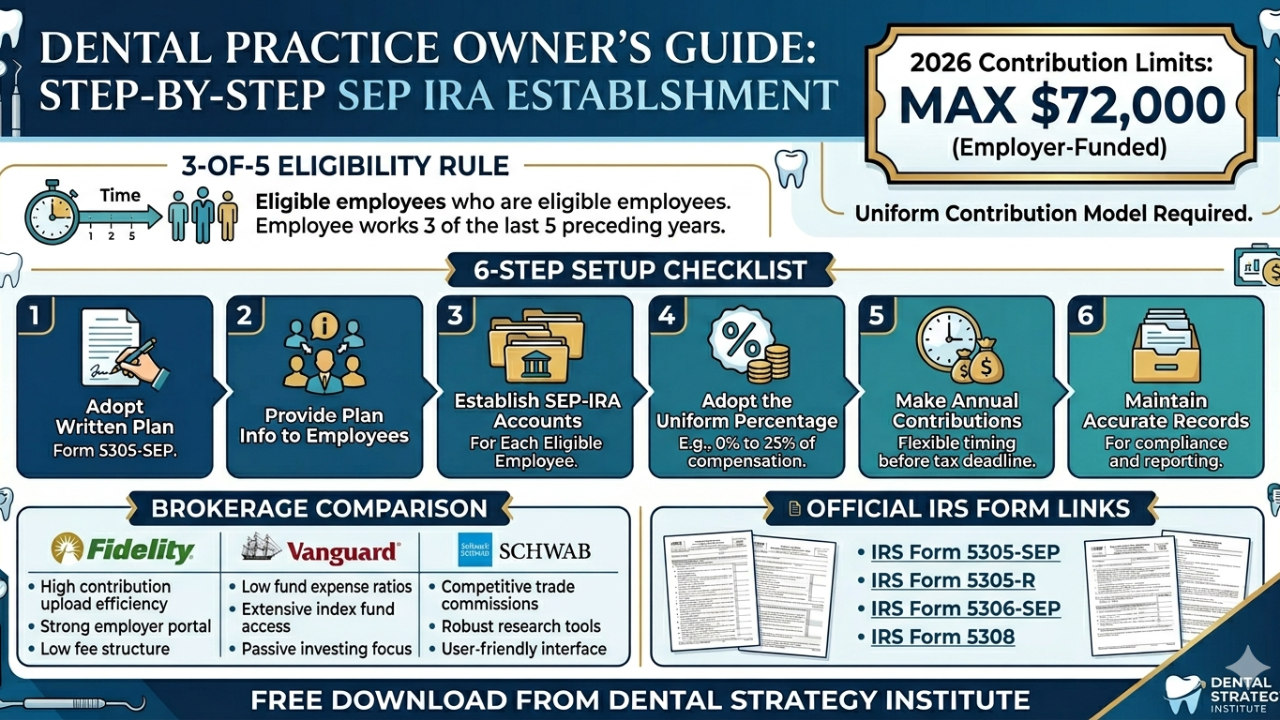
If you are a dental practice owner and you are not maximizing a retirement plan designed specifically for business owners, you are paying more in taxes than you need to. There is no more accurate way to say it.
The SEP IRA—Simplified Emplo...
By Dental Strategy Institute | June 2026 | 7-Minute Read
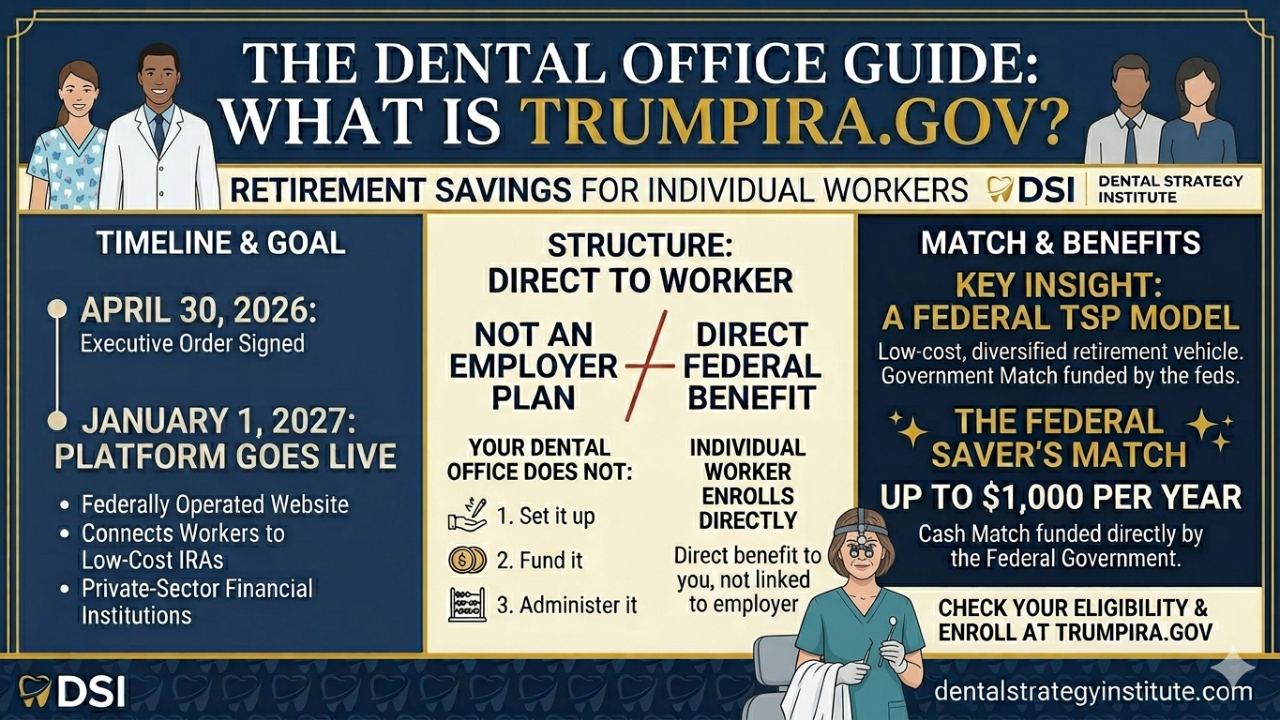
Most conversations about retirement benefits in dentistry focus on what the practice has to build, fund, and administer. That is the right conversation—and it is one DSI covers extensively. But a new executive order signed on April 30, 2026...