
Browse by Topic: DSO & M&A · Practice Operations · Hygiene Career Track · Practice Finance · Regulation & Compliance
The same software reading your X-rays chairside may be reading them again at the insurance company.
Straight answer first. Chairside dental AI (Overjet, Pearl, VideaHealth and a growing list of others) typically runs about $250 to $500 a month per location for a standard practice, based on publishe...
Every practice I've ever walked has a room that's losing money by sitting there quietly.
Here's the short version. Finance a mid-tier operatory package over five years at today's rates and the payment runs somewhere between about $455 and $1,000 a month, depending on the brand and tier. With roughl...
The most expensive chair in your office is the one you never bought.
You came for a number, so let's start there. Using the ADA Health Policy Institute's own figures, the average general dentist generates roughly $698,000 a year in revenue. Spread that across the two to three operatories a dentist ...
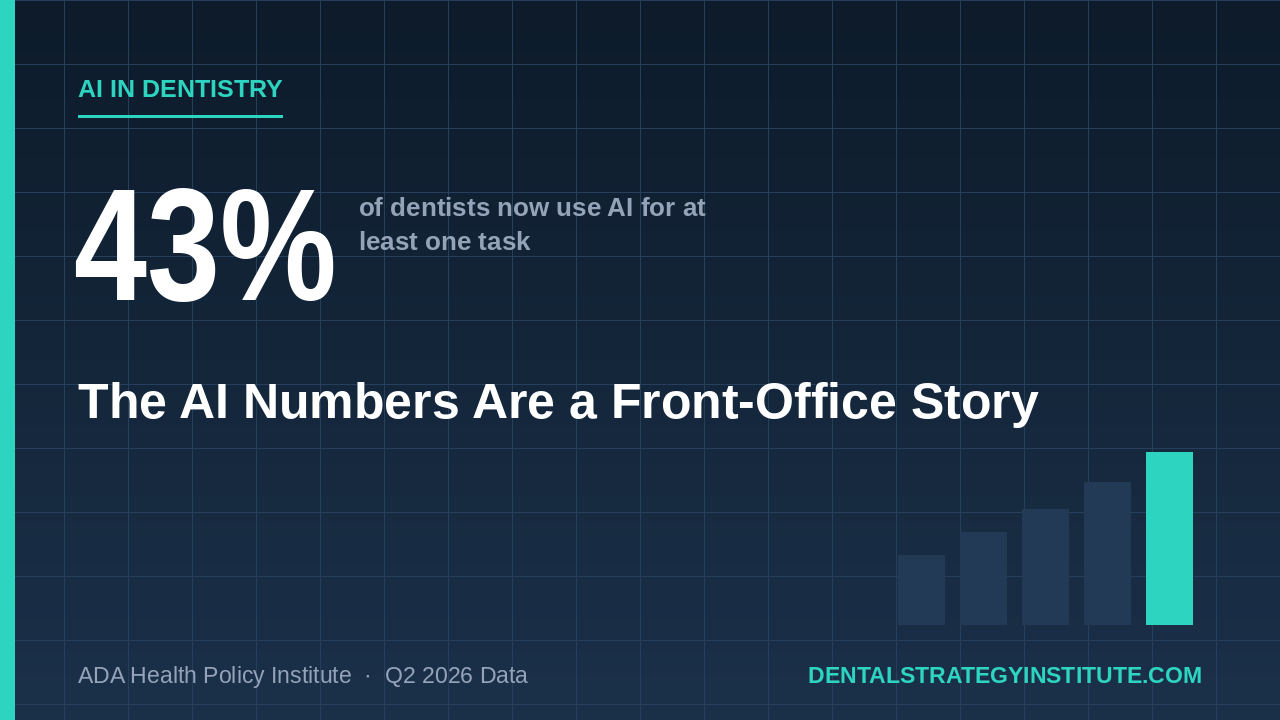
The ADA added an AI section to its Q2 2026 economic report, and the headline number is doing the rounds already: 43.3% of dentists use AI for at least one task in their practice.
Fine. Adoption is real, faster than most people expected, and that's a legitimate finding.
The number I can't stop lookin...
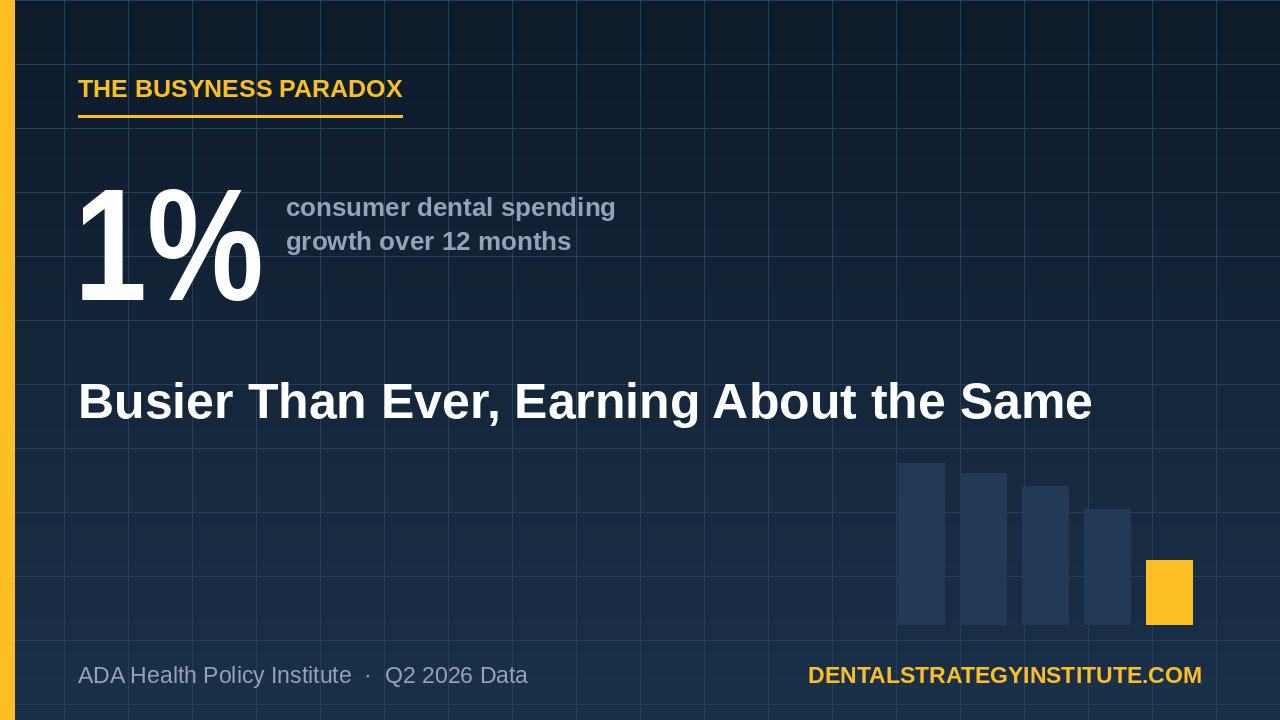
The ADA Health Policy Institute published its Q2 2026 economic report in July, and buried on slide 30 is a sentence I've been chewing on for two weeks. After laying out that dentists are busier and that consumer dental spending grew only 1% over twelve months, the authors offer three possible explan...
The short answer: leadership in a dental practice is mostly clarity plus consistency. Your team needs to know what winning looks like this week, who owns what, and that the standard applies to you too. Practices with strong cultures aren't the ones with the best mission statement on the wall — they'...
Direct answer: collect 98% or more of adjusted production, keep AR over 90 days below 15% of total AR, and submit clean claims within 24 hours of the appointment. The money you lose in collections is pure margin — there's no lab bill, no chair time, no supply cost attached to it. Planet DDS calculat...
Here's the short answer: a healthy hygiene department generates at least 25% of a practice's adjusted production, keeps 90% of recare patients scheduled, and treats periodontal disease at a rate that roughly matches its actual prevalence in the population. CDC data puts periodontitis at 47.2% of adu...
Short version: the fastest revenue in dentistry is already in your database. Recall is keeping active patients on schedule — target 90% of hygiene patients leaving with their next appointment booked the same day. Reactivation is going back after patients who've fallen off, typically 30% to 50% of a ...
The direct answer: effective dental scheduling means building the day around production blocks instead of filling holes chronologically. You set daily production goals by provider, reserve prime-time slots for high-value procedures, protect hygiene capacity, cut your combined no-show and cancellatio...
The direct answer: treatment acceptance improves when you fix diagnosis consistency first, presentation second, and financing third — in that order. National case acceptance medians run 55% to 65%, but the more revealing number is case completion, which averages just 47% industry-wide. Ethical pract...
Here's the short answer: there are ten numbers that tell you almost everything about whether your practice is healthy, and most owners are tracking maybe three of them. Production. Collections. Overhead. Case acceptance. New patients. Hygiene reappointment. Cancellation rate. Production per operator...