
Browse by Topic: DSO & M&A · Practice Operations · Hygiene Career Track · Practice Finance · Regulation & Compliance
Most equipment decisions get made on one number, the price at the bottom of the quote.
This piece gives you the other six. The worksheet below (free, in Excel, with the formulas showing) takes about ten minutes and tells you whether a new operatory adds to your retirement or costs it, using your own...
The same chair is a different purchase at 38, at 52, and at 61.
Here's the direct answer. The break-even on a staffed operatory barely moves with your age. It lands between about 2.5 and 2.7 added visits a week whether you're 38 or 61. What moves is everything around it: how much the room can add t...
A tax deduction returns 24 to 37 cents on a dollar you've already spent.
Here's the direct answer. Under current law, most dental equipment can be written off in the year you put it in service, thanks to 100% bonus depreciation and a 2026 Section 179 limit of about $2.56 million. That sounds like fr...
Every dollar you put into a chair stops working somewhere else.
Here's the short answer. If you pay cash for a $22,700 operatory and it never sees a patient, you've given up about $88,000 of retirement wealth, assuming that money would have earned 7% for 20 years before taxes. That's the worst case...
The cheapest machine in this article will probably pay for itself before the most expensive one gets unboxed.
If you're short on time: an intraoral scanner runs roughly $20,000 to $37,500 and is the entry ticket for everything else digital. A dental 3D printer costs $3,500 to $12,000 as a complete ...
The scan fee is the smallest check a CBCT will ever write you.
So, is CBCT worth it for a general dentist? A unit runs roughly $80,000 to $200,000 installed, and financing an $80,000 unit over seven years comes to about $1,256 a month. At the ADA's reported median fee of $275 for a limited-field sc...
Every practice I've ever walked has a room that's losing money by sitting there quietly.
Here's the short version. Finance a mid-tier operatory package over five years at today's rates and the payment runs somewhere between about $455 and $1,000 a month, depending on the brand and tier. With roughl...
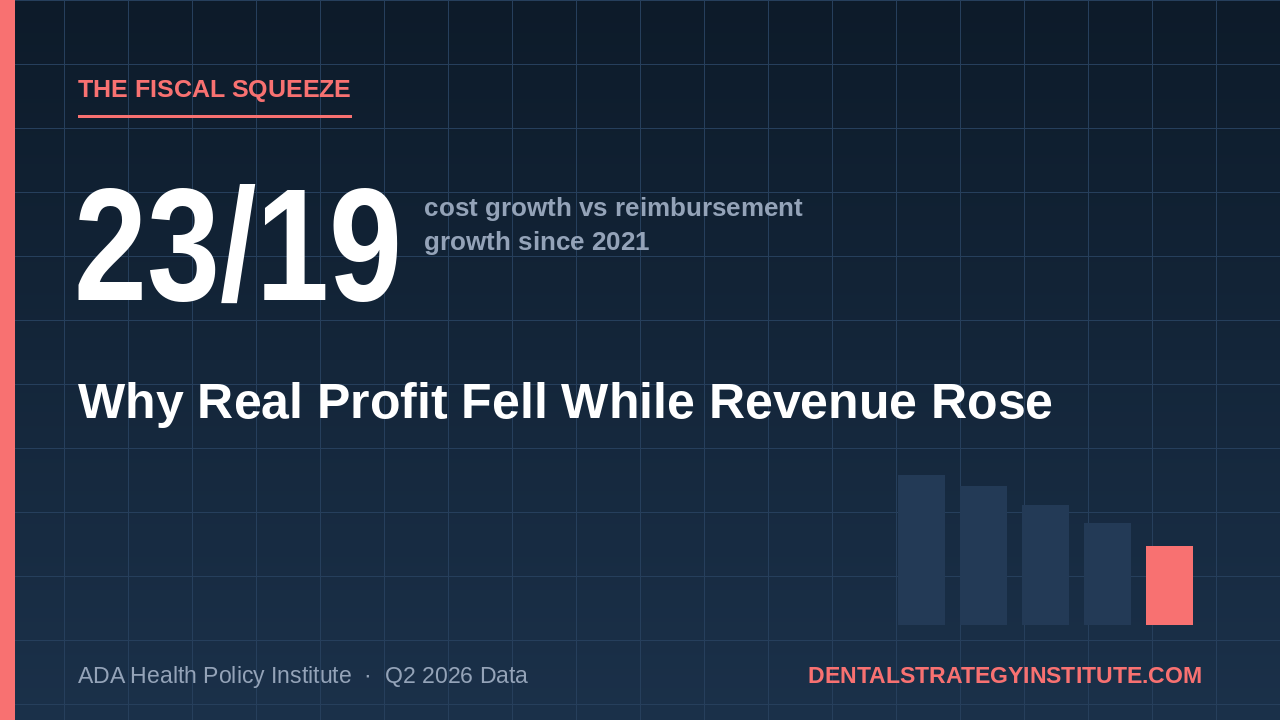
Every quarter the ADA publishes two index numbers side by side and every quarter the industry press reprints them without doing the arithmetic. The Q2 2026 report is no exception.
Here they are. Since January 2021, prices for dental equipment and supplies rose 23%. Hourly earnings for dental office...
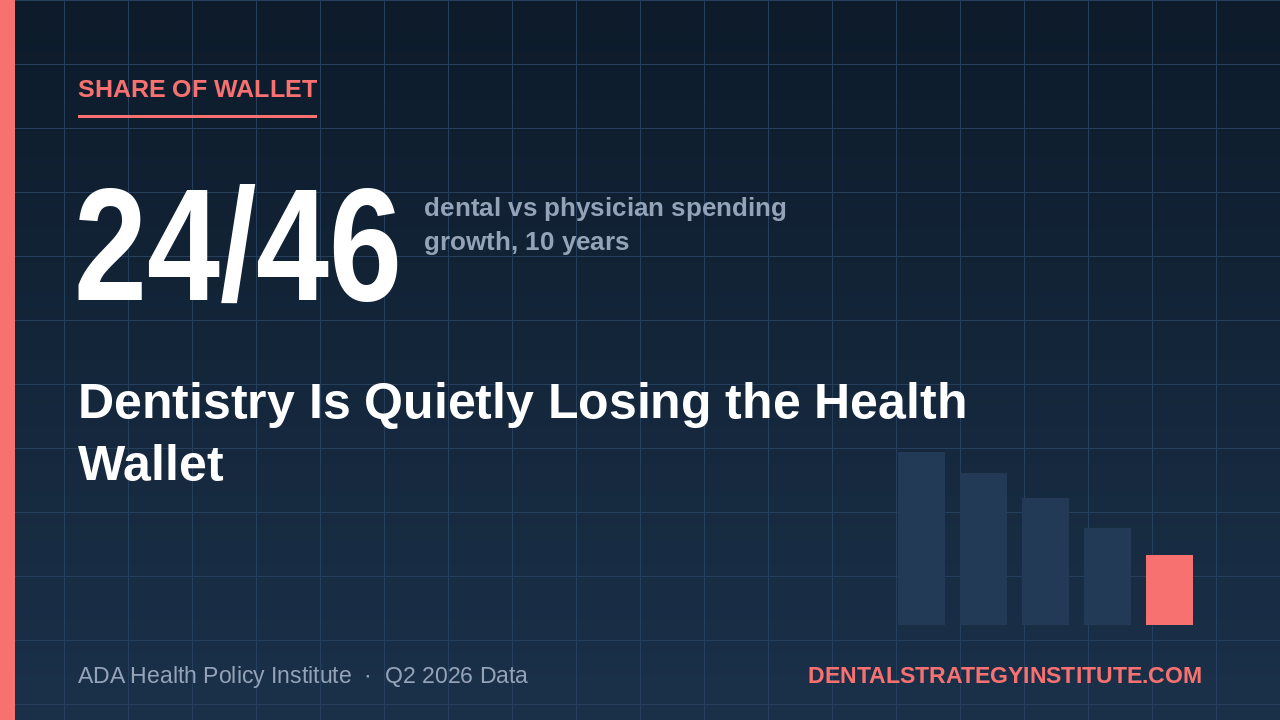
Most of what gets written about the dental economy is cyclical. Good quarter, bad quarter, confidence up, confidence down. The ADA's Q2 2026 report contains one chart that isn't cyclical at all, and it's the one I'd put in front of anybody making a ten-year decision about this industry.
Over the de...
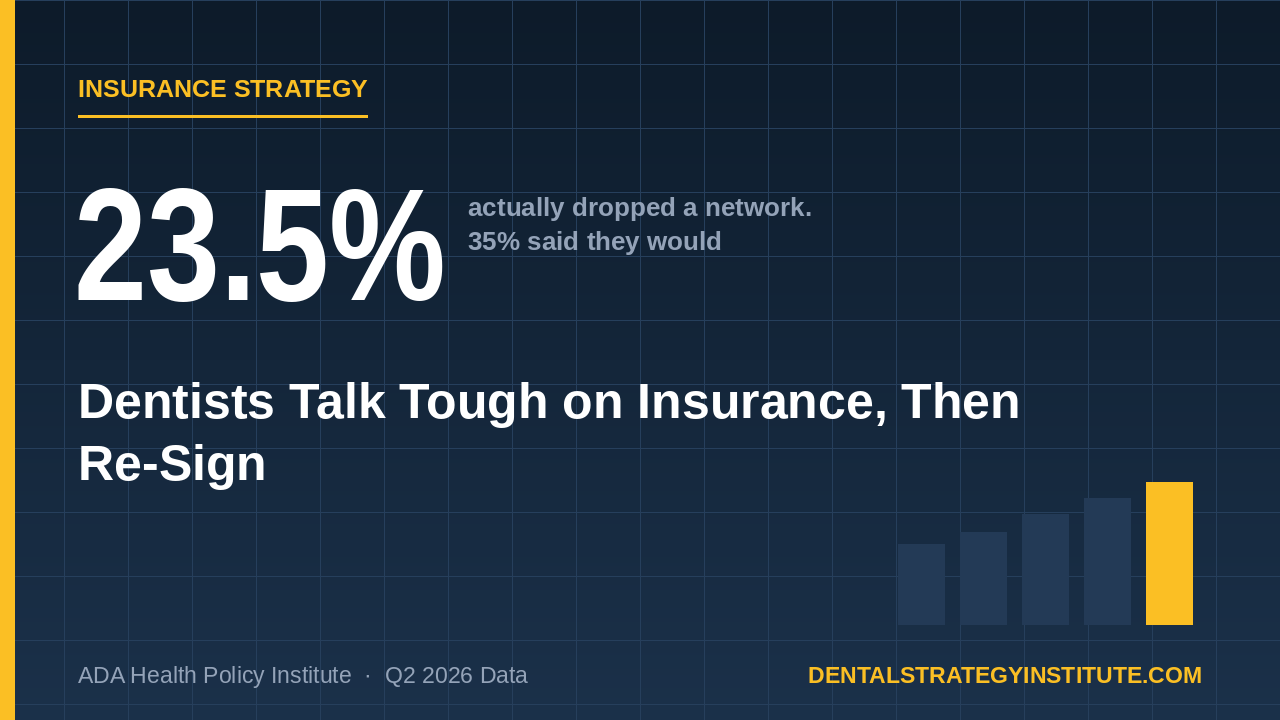
There's a slide in the ADA's Q2 2026 report that almost nobody is writing about, and it's the most revealing page in the deck.
In Q4 of 2025, the Health Policy Institute asked owner dentists what they planned to do in 2026. Then, six months later, they asked the same group what they'd actually done...
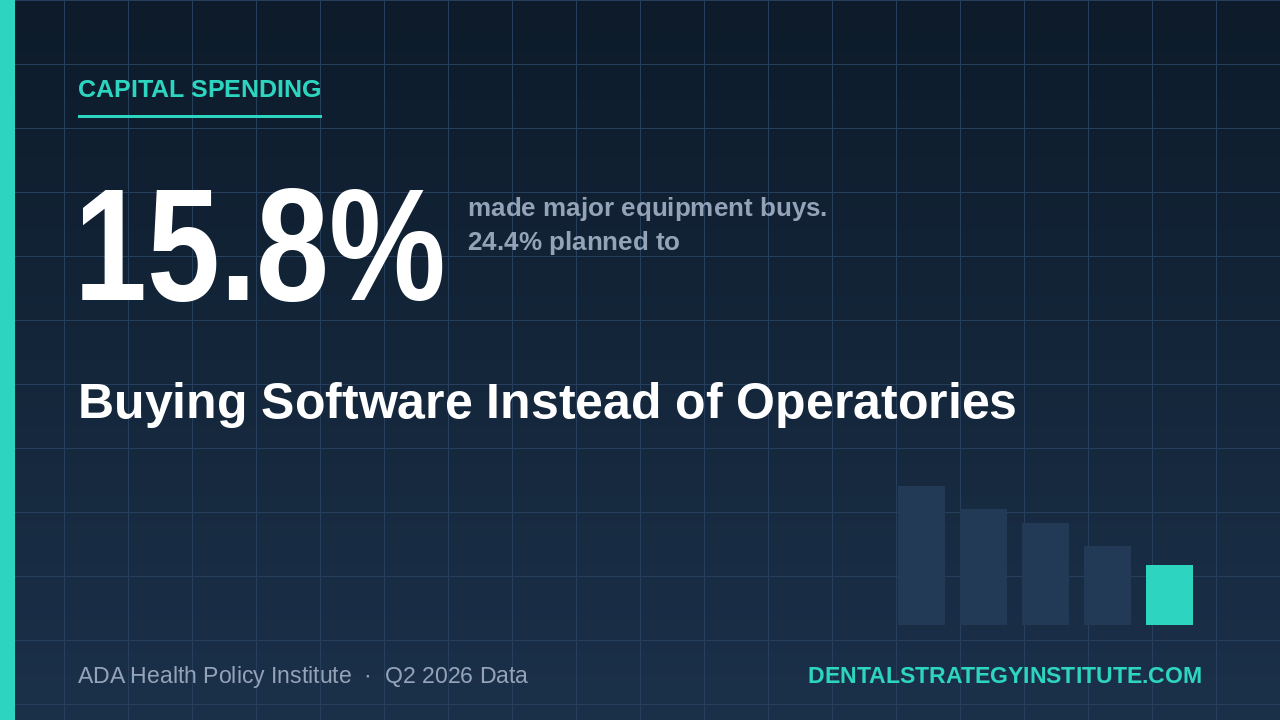
I spent twenty-five years on the manufacturing side of this industry, which means I've sat through a lot of forecast meetings where somebody held up a survey showing dentists planned to buy equipment. Those forecasts were usually wrong in a predictable direction.
The ADA's Q2 2026 report just publi...
Dental strategy is the set of financial, operational, and regulatory decisions that determine whether a dental practice survives, scales, or gets sold on someone else's terms. It breaks into six working pillars: practice transitions and DSO affiliation, equipment as a capital asset, insurance and re...