
Browse by Topic: DSO & M&A · Practice Operations · Hygiene Career Track · Practice Finance · Regulation & Compliance
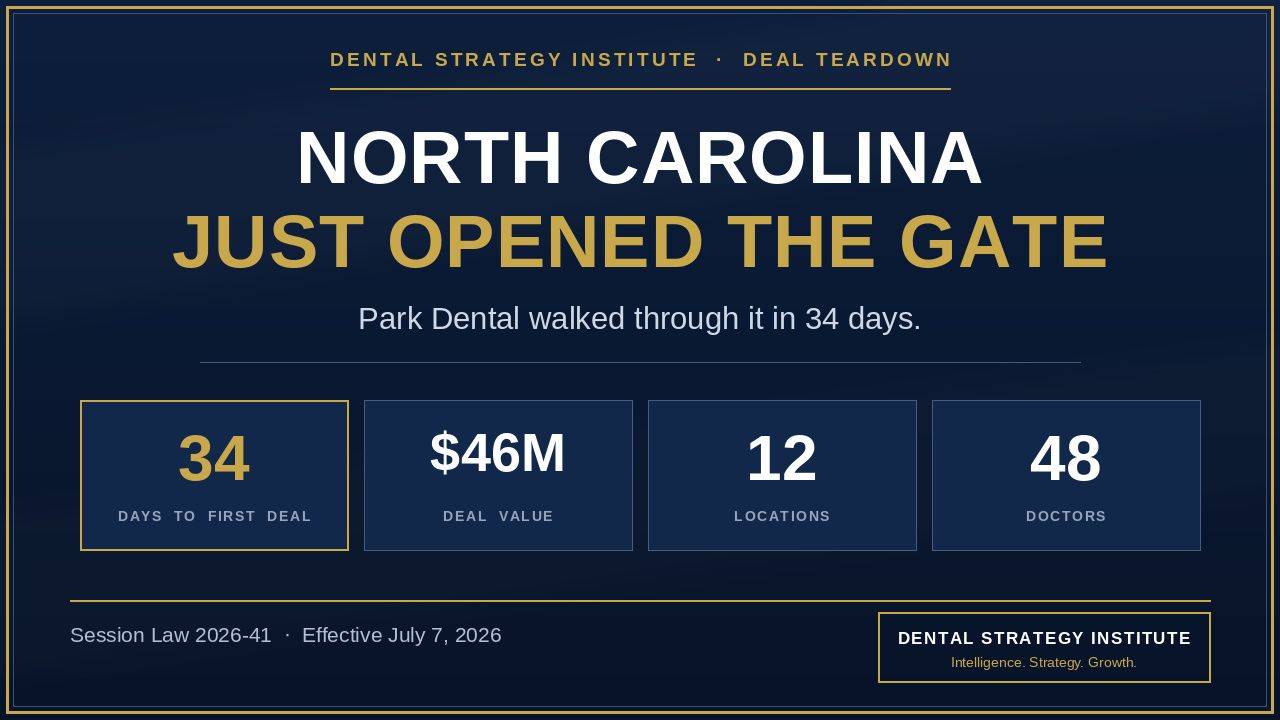
Thirty-four days.
That's how long it took. North Carolina's new law killing the dental board's pre-approval requirement for management agreements took effect on July 7, 2026. On August 10, Park Dental Partners announced it was buying Village Family Dental — twelve locations, forty-eight doctors, ea...
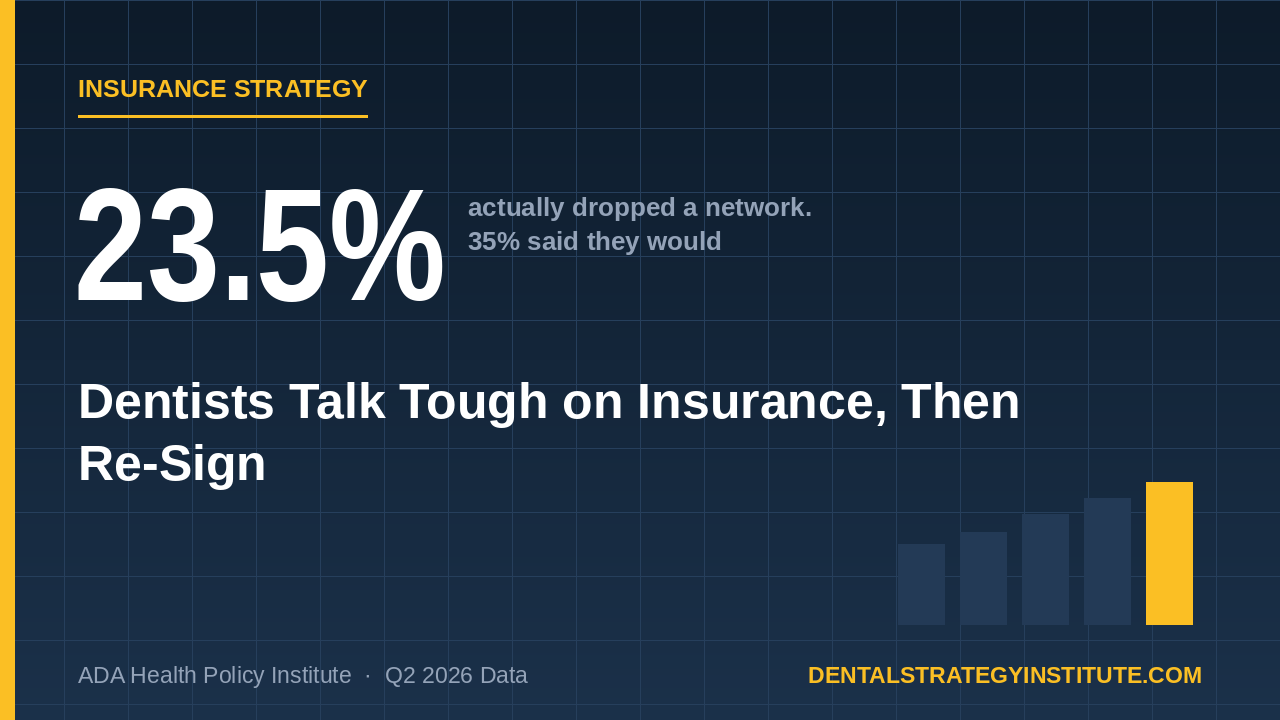
There's a slide in the ADA's Q2 2026 report that almost nobody is writing about, and it's the most revealing page in the deck.
In Q4 of 2025, the Health Policy Institute asked owner dentists what they planned to do in 2026. Then, six months later, they asked the same group what they'd actually done...
Every state now permits some form of hygiene practice outside direct chairside supervision by a dentist — the scope varies widely, but the door that used to be fully closed is, in most places, at least partly open. What hasn't caught up is the business information hygienists need to actually walk th...
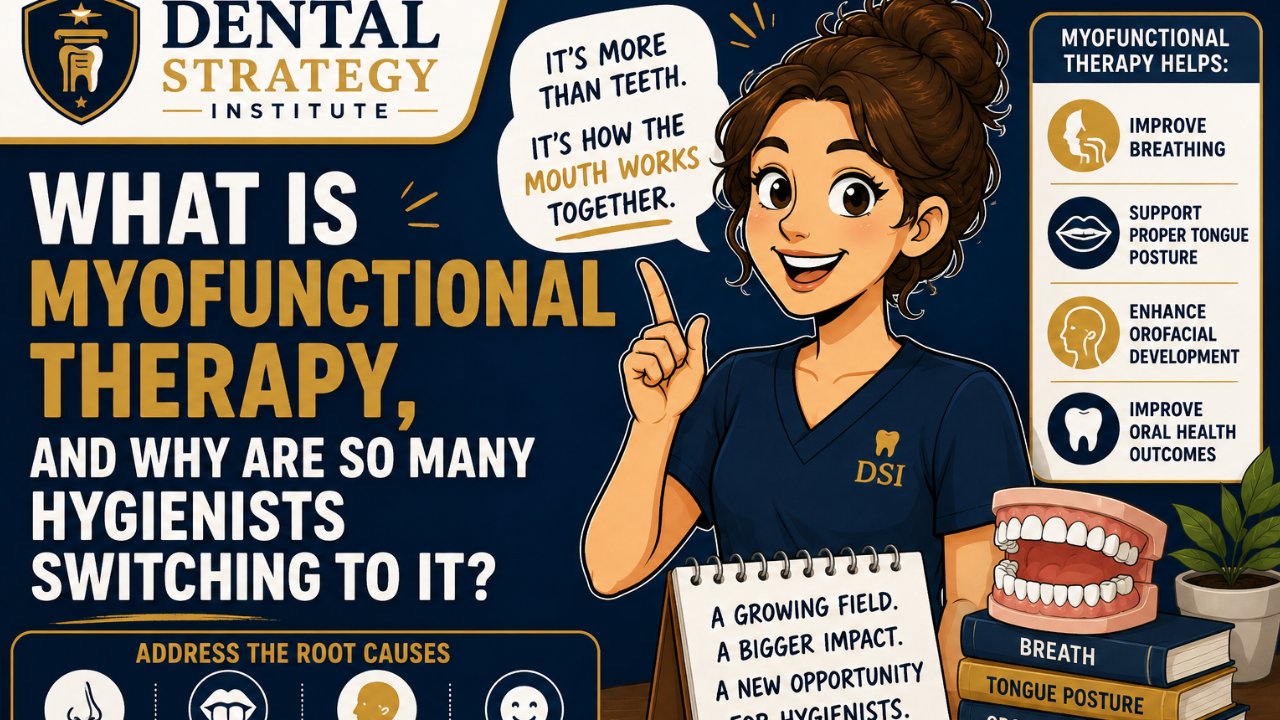
Myofunctional therapy has gone from a niche referral almost nobody in general dentistry had heard of, to a service line that orthodontists, airway-focused dentists, ENTs, and sleep clinics are actively looking to refer patients into — and increasingly, to bring in-house. For a dental hygienist looki...
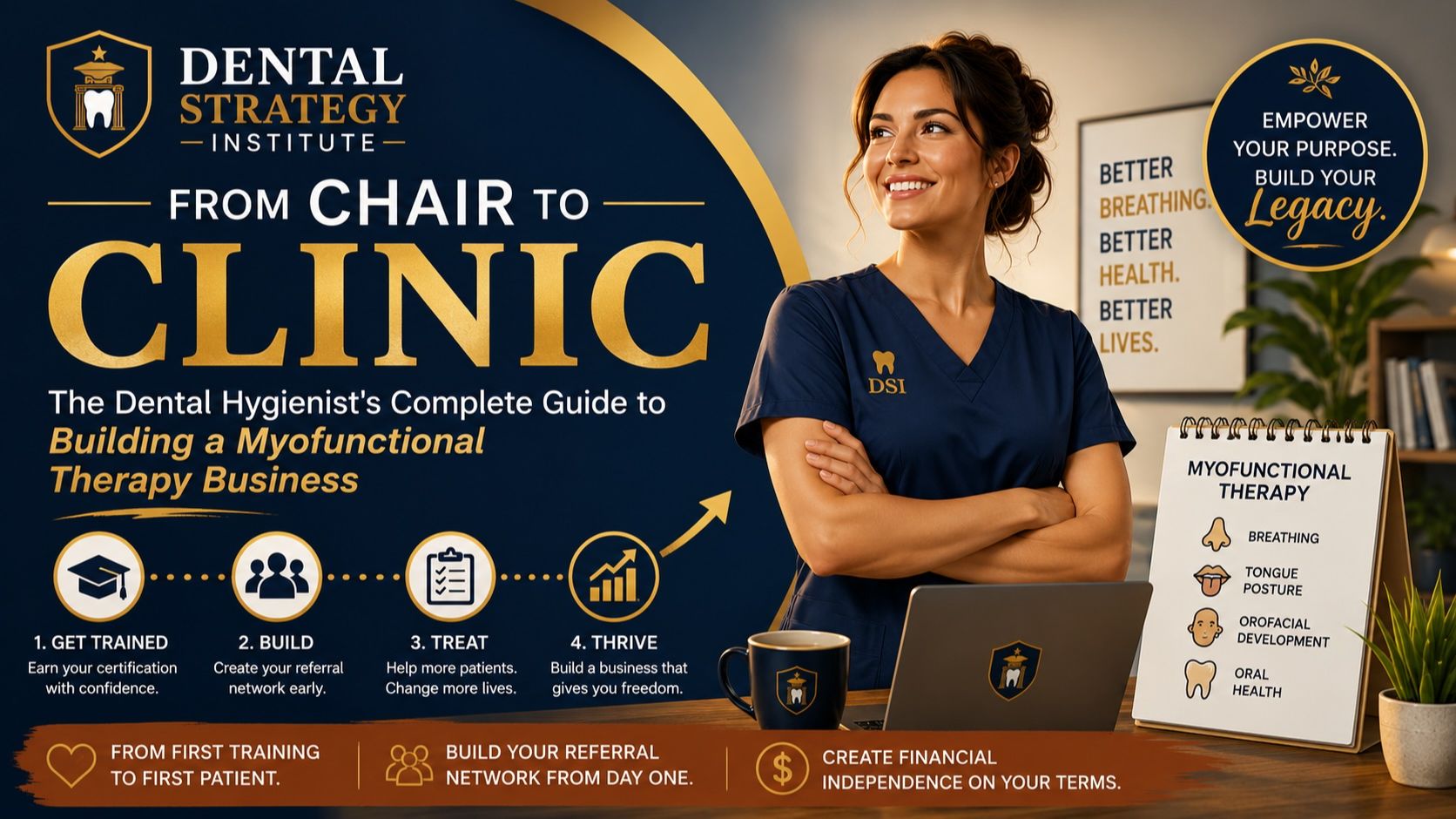
More hygienists are stepping away from full-time chairside work and building something of their own. Orofacial myofunctional therapy has become one of the most compelling paths for making that move — a cash-pay clinical specialty, in genuinely short supply, that draws on skills a hygienist already h...
By Dental Strategy Institute | June 2026 | 7-Minute Read
The average retirement age for U.S. dentists is now 68.7 years. One third of dental assistants and one third of dental hygienists expect to retire within five years. Several states have more than 40% of their active dentists aged 55 or olde...
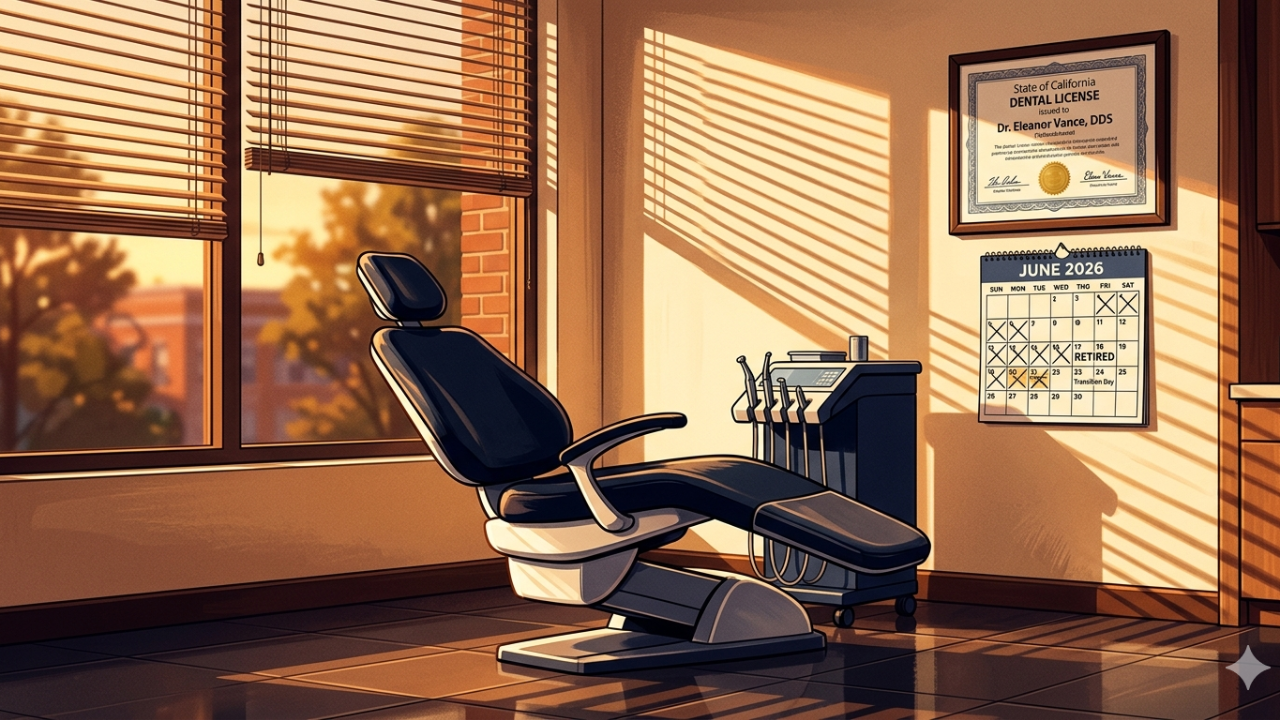
By Dental Strategy Institute | June 2026 | 7-Minute Read Right now, in the summer of 2026, demand for dental practices is high and supply is low. DSOs are hungry. Sixty-nine percent of them expect to increase their acquisition activity this year, and many report relying more heavily on brokers beca...
Most dental practice exits are reactive. An offer arrives, or a health event forces the issue, or the owner hits a point of professional fatigue and starts looking for a way out. The transaction happens under time pressure, with preparation that was done in a hurry, and the outcome reflects that. Th...
The conversation usually starts the same way. A practice owner has just run the numbers on their PPO contracts — or they've been handed a 4% fee reduction notice from a major plan — and they're thinking, seriously this time, about whether there's a way out. Going insurance-free is one of those ideas...

The math on PPO participation gets worse every year. Write-offs that once felt manageable now consume 35 to 45 percent of production in many markets. Fee schedules that haven't moved in a decade are being applied to a cost structure that has. And yet the conventional wisdom — that you can't exit PPO...

Every dentist eventually hears the pitch. A well-dressed rep from a regional or national dental support organization sits across from you, slides a deck across the table, and starts talking about "partnership." The numbers look interesting. The promises sound reasonable. And somewhere in the back...