
Myofunctional Therapy as a Career: What It Actually Pays, and What It Takes to Get There
Jul 30, 2026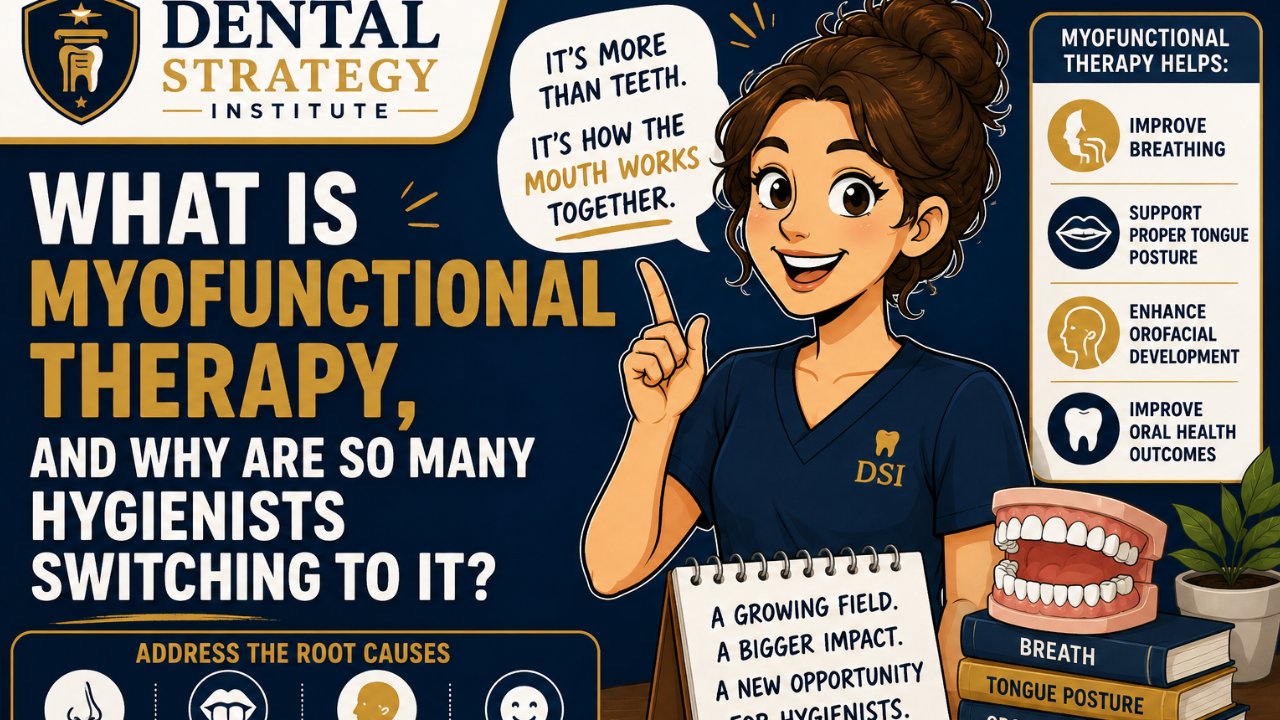
Myofunctional therapy has gone from a niche referral almost nobody in general dentistry had heard of, to a service line that orthodontists, airway-focused dentists, ENTs, and sleep clinics are actively looking to refer patients into — and increasingly, to bring in-house. For a dental hygienist looking at a career path beyond the operatory, this is one of the few genuine growth lanes that doesn't require going back to dental school. It also gets pitched with more enthusiasm than actual numbers. Here are the numbers.
What Myofunctional Therapy Actually Is, in One Paragraph
Orofacial myofunctional therapy treats dysfunctional patterns of the tongue, lips, and facial muscles — things like tongue thrust, mouth breathing, and improper swallow patterns — that affect everything from orthodontic relapse and airway health to speech and sleep-disordered breathing in both children and adults. It sits at the intersection of dentistry, speech pathology, and airway medicine, which is exactly why demand is coming from multiple specialties at once.
The Credentialing Path
Unlike independent hygiene practice, which is governed by state dental practice acts, myofunctional therapy certification is not a state-licensed scope-of-practice question in the same way — it's a specialized certification you add on top of your existing hygiene (or SLP, or other clinical) license. Certification programs typically run:
- Time investment: 6–12 months of coursework plus supervised case hours, depending on the certifying body
- Cost: $2,500–$6,000 for a full certification track, including case-review and mentorship components
- Prerequisite: most programs expect an existing clinical license (RDH, SLP, or similar) — this is an add-on credential, not a standalone entry-level career
That relatively modest time and cost investment, against the income potential below, is what makes this an attractive lane specifically for hygienists already working in a clinical setting.
What It Actually Pays
This is the part that varies most by practice model, so it's worth breaking out by structure rather than quoting one number:
- Fee-for-service, cash-pay sessions: Most myofunctional therapy is billed as a cash-pay service (insurance coverage is limited and inconsistent), typically $75–$150 per session, with a full treatment course running 12–20 sessions over 3–6 months. A single case can represent $1,200–$2,500 in revenue across the treatment arc.
- Employed within a practice: Hygienists adding myofunctional therapy as a service line within an existing dental or orthodontic practice typically see it structured as either an hourly rate premium over standard hygiene pay, or a revenue-share/production model on the therapy sessions specifically — often 30–50% of session fees, on top of base hygiene compensation if it's a blended role.
- Independent/cash-pay private practice: Full-time independent myofunctional therapists building their own caseload can realistically build toward $70,000–$110,000+ annually once caseload is established, though — as with any independent model — the ramp-up period before reaching a full caseload is real and should be planned for financially, not assumed away.
Why Demand Is Growing Faster Than Supply Right Now
Three things are converging at once: growing physician and dentist awareness of the airway/sleep connection to craniofacial development, orthodontists increasingly wanting a myofunctional component for stability of tooth movement (reducing relapse), and a genuine shortage of certified providers relative to referral demand in most markets. That supply gap is exactly why this reads as a real opportunity rather than a trend piece — practices and specialists are actively looking for someone to refer to or hire, and in most metro areas there are still more referral sources than certified providers to absorb them.
The Realistic Path In
- Confirm your state doesn't impose additional restrictions on this specific service beyond your existing license (rare, but check before enrolling in a program).
- Choose a certification program with strong case-mentorship components, not just coursework — the supervised case hours are where the actual clinical skill gets built.
- Decide your model before you certify: are you adding this inside your current employed role, or building toward independent practice? The certification is the same either way, but it changes how you should build your case-study portfolio during training (referral-source relationships matter more for independent practice; internal practice buy-in matters more for an employed service line).
- Build referral relationships with local orthodontists, ENTs, and sleep physicians early — before you have a full caseload, not after.
Myofunctional Therapy as a Career walks through the full certification comparison, the complete revenue model by practice type, and the referral-relationship playbook in depth — with a companion toolkit of calculators (a cost-of-care fee-setter, revenue projector, tax and reserve models), ready-to-brand clinical forms, and marketing templates. Explore the book + toolkit → Or grab the free 50-state Scope-of-Practice Quick Reference to check your state first.
Related Reading
Stay connected with news, offers and updates!
Join our mailing list to receive the latest news, offers and updates from our team.
Don't worry, your information will not be shared.
We hate SPAM. We will never sell your information, for any reason.