Lease or Own Your Dental Office? Run the Numbers Before You Sign
Lease or own, new build or expansion? Test your dental office plan against three lender benchmarks with the free Dental Office Build Tool before you sign.
Read →
Why Your Neck and Wrists Go First: Ergonomics for Dental Hygienists
Hygienists report neck, shoulder and wrist pain at high rates. Here's what the research says, why it starts, and the ergonomic fixes worth trying first.
Read →
AI Diagnosis in Dentistry: Case Acceptance Tool or Expensive Second Opinion?
Dental AI runs about $250–$500 a month per location. A randomized trial found AI raised caries detection from 72% to 81%, and raised invasive treatment decisions too. How to judge the ROI and the ethics.
Read →
The Sixth Room: How Few Patients It Takes for an Extra Dental Operatory to Pay for Itself
An extra operatory breaks even at about half a patient visit a week on equipment alone, and about 2.6 visits a week with a part-time assistant. Here's the full math.
Read →
What Is One Dental Operatory Really Worth? The Math Most Owners Never Run
A single operatory can be worth $230K–$350K a year in production. How to calculate what yours is worth, why empty chairs cost more than equipment, and how to fit more rooms in the same budget.
Read →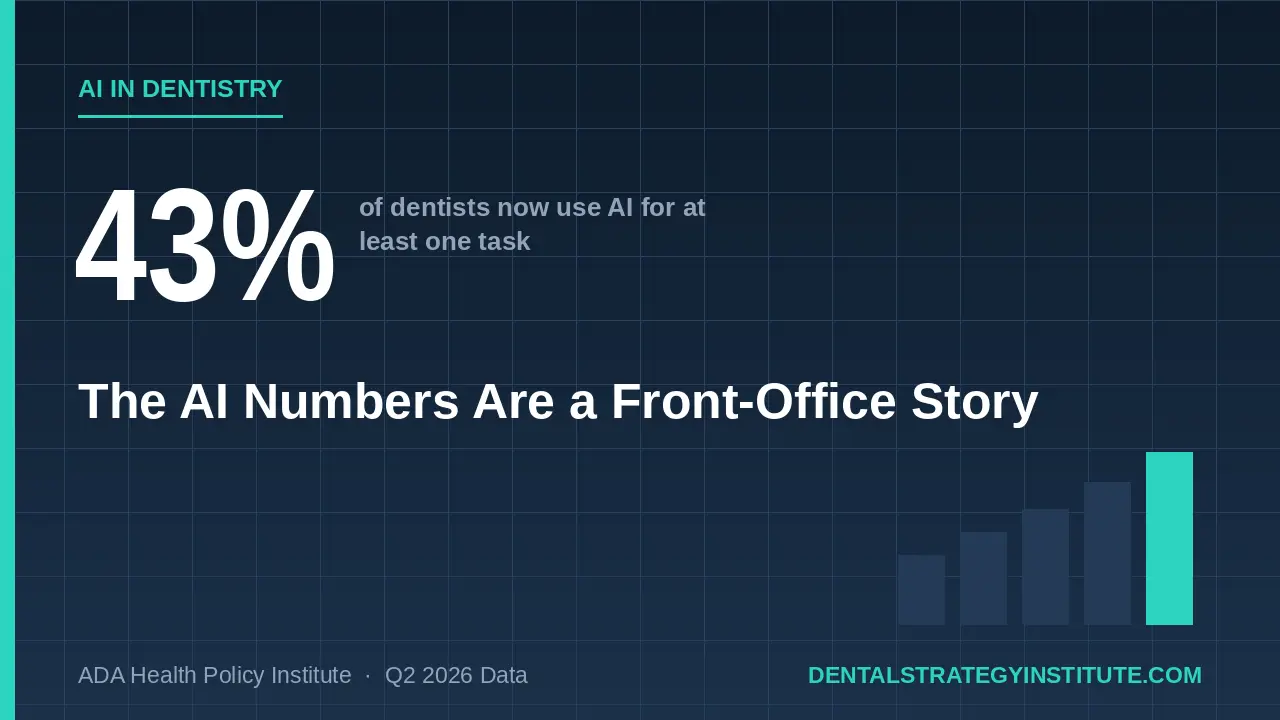
43% of Dentists Now Use AI. The Real Story Is Where They Won't.
43.3% of dentists use AI for at least one task in 2026, led by imaging at 22.8%. But 82.6% refuse AI for treatment recommendations while 12.9% already use it. The ADA Q2 2026 AI data, read carefully.
Read →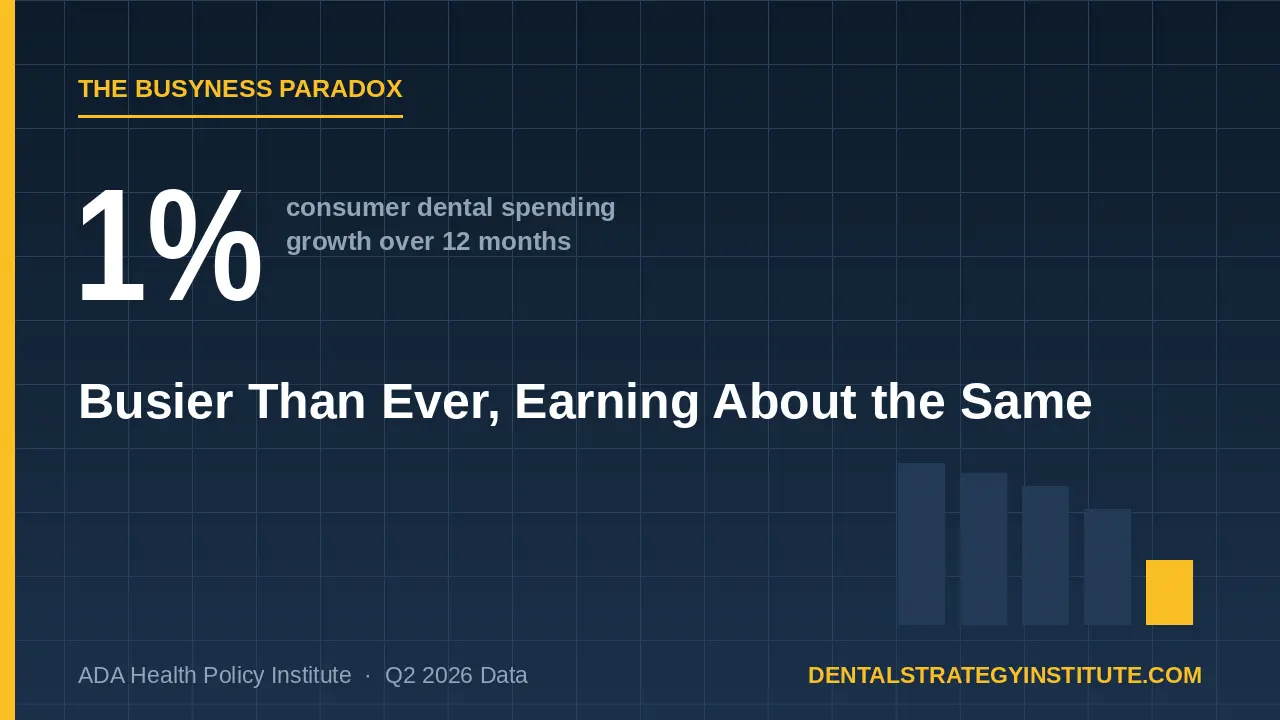
The Busyness Paradox: Dentists Are Working Harder in 2026 for the Same Money
ADA Q2 2026 data shows dentists busier and new-patient wait times at 13.9 days while consumer dental spending grew just 1% in 12 months. What that gap means for revenue per chair-hour in private practices and DSOs.
Read →
What Leadership Actually Looks Like in a Dental Practice
Leadership in a dental practice is clarity plus consistency. How to define what winning looks like, write values you can actually enforce, and build a team with shared goals.
Read →
AR and Collections: How to Collect the Money You Already Made
Collect 98% of adjusted production and keep AR over 90 days under 15%. Claims discipline, ethical patient collections, and why revenue cycle is the silent EBITDA lever.
Read →
Hygiene and Perio: Where the Mouth Meets the Money
A healthy hygiene department produces 25%+ of adjusted production. Perio prevalence is 47.2% of adults 30+. If your perio percentage is single digits, the diagnosis is the problem.
Read →
Recall and Reactivation: How to Grow Revenue With the Patients You Already Have
Recall keeps active patients on schedule. Reactivation recovers the 30-50% who fell off. Benchmarks, segmentation strategy, and a 90-day plan that requires no new patients.
Read →
How to Schedule Effectively and Maximize Capacity: The Schedule Sets the Tone, Tempo, and Profitability
How to build a dental schedule around production goals instead of open holes — block templates, no-show control, same-day capacity, and the benchmark data on schedule consistency.
Read →Treatment Acceptance: How to Get Patients to Say Yes Without Over-Treating or Under-Treating
Case acceptance improves when you fix diagnosis consistency first. Why the industry's 47% case completion rate matters more than acceptance, and how to avoid both over- and under-treatment.
Read →
The 10 Dental KPIs Every Practice Owner Should Know (and What Good Actually Looks Like)
The dental KPIs that actually predict profitability — collections rate, overhead, case completion, hygiene reappointment, AR aging — with 2026 benchmark data and target ranges.
Read →
Will Your New Dental Office Pencil Out? The 3 Feasibility Benchmarks Lenders Quietly Use
Three benchmarks decide whether a dental build pencils out: debt coverage, 15+ new patients a month, and production per operatory. Test yours free.
Read →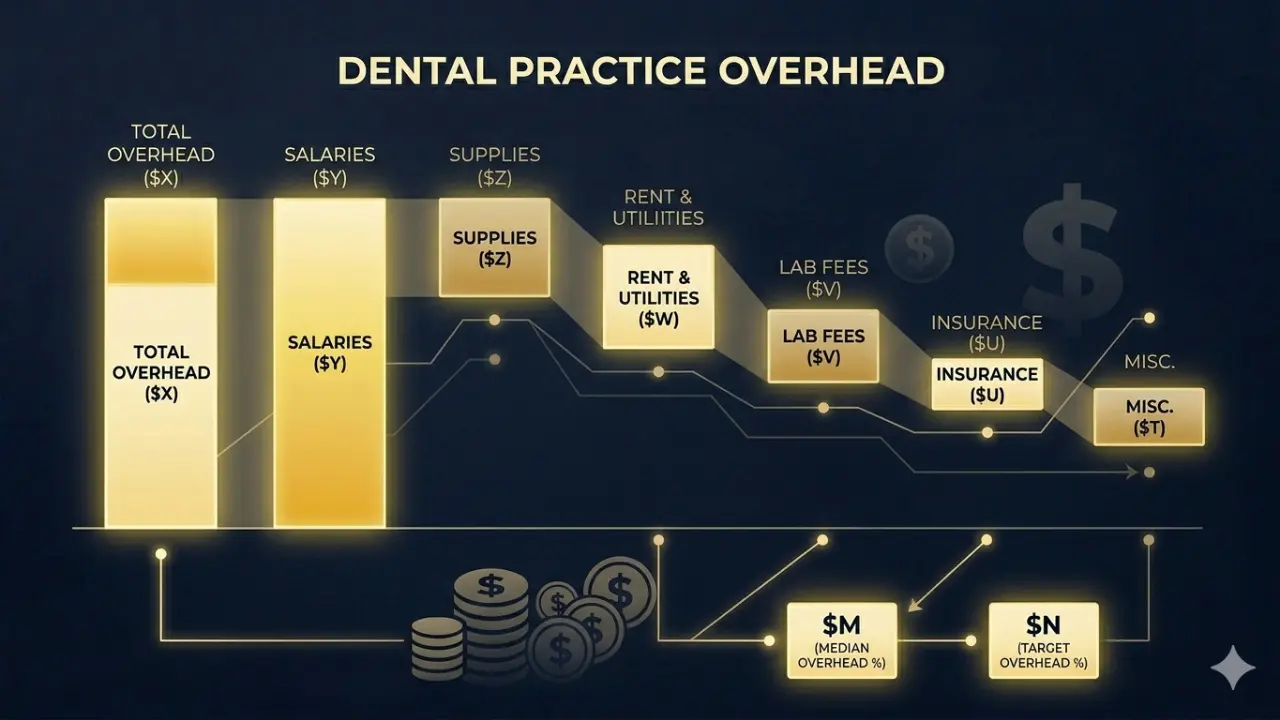
What Should Dental Practice Overhead Be? Benchmark Data Across All Six Cost Categories
What should dental practice overhead be? See national benchmark data across six overhead categories — occupancy, supplies, lab, marketing, and more — by percentile for GP practices.
Read →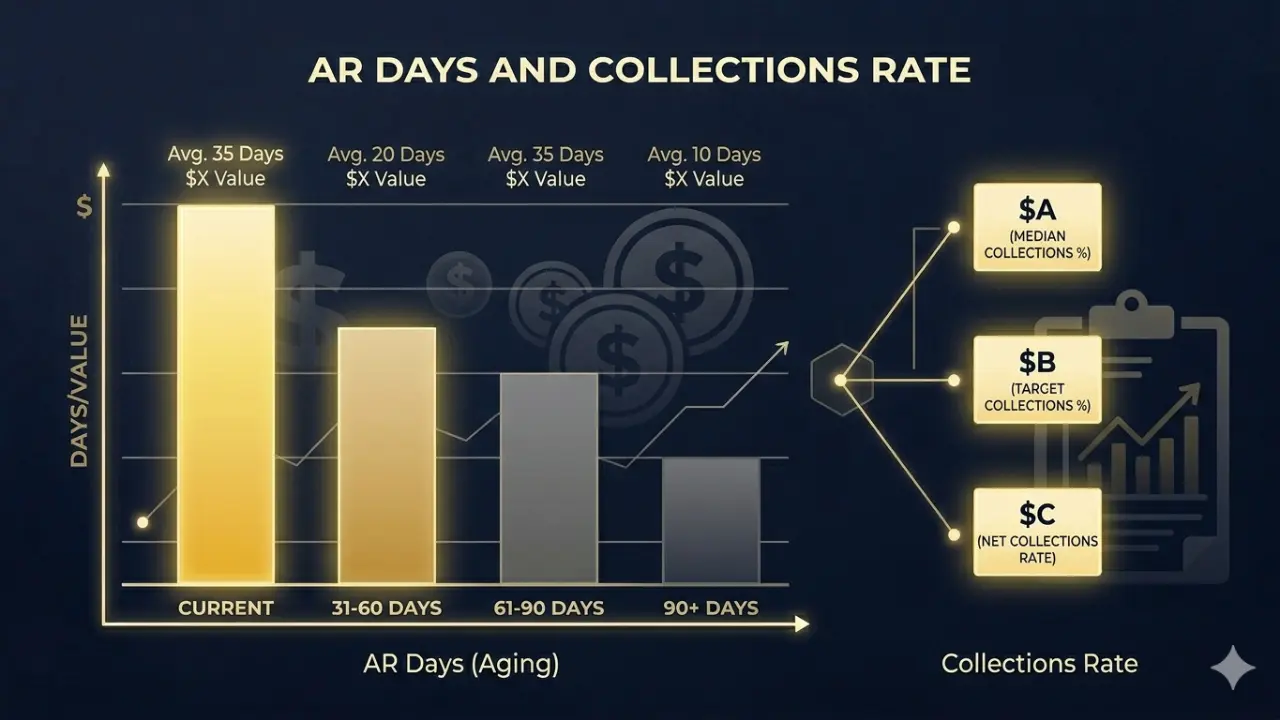
Dental AR Days and Collections Rate: What the Benchmark Data Says and How to Fix Both
What are good AR days and collections rate benchmarks for a dental practice? See national data by percentile and calculate how much revenue is sitting in your 90+ day AR bucket.
Read →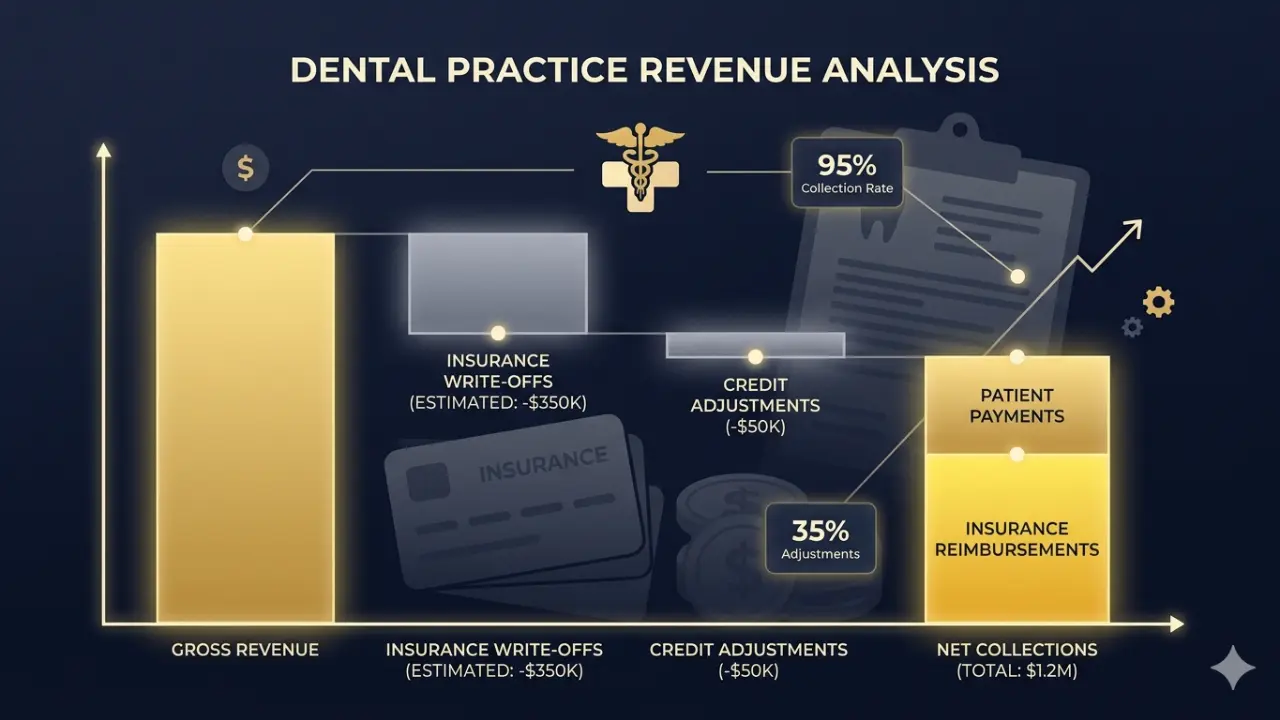
What Is a Good PPO Write-Off Rate? Dental Benchmark Data and the Drop-Plan Analysis
What is a good PPO write-off rate for a dental practice? See national benchmark data by percentile and model the financial impact of dropping your worst-performing plan.
Read →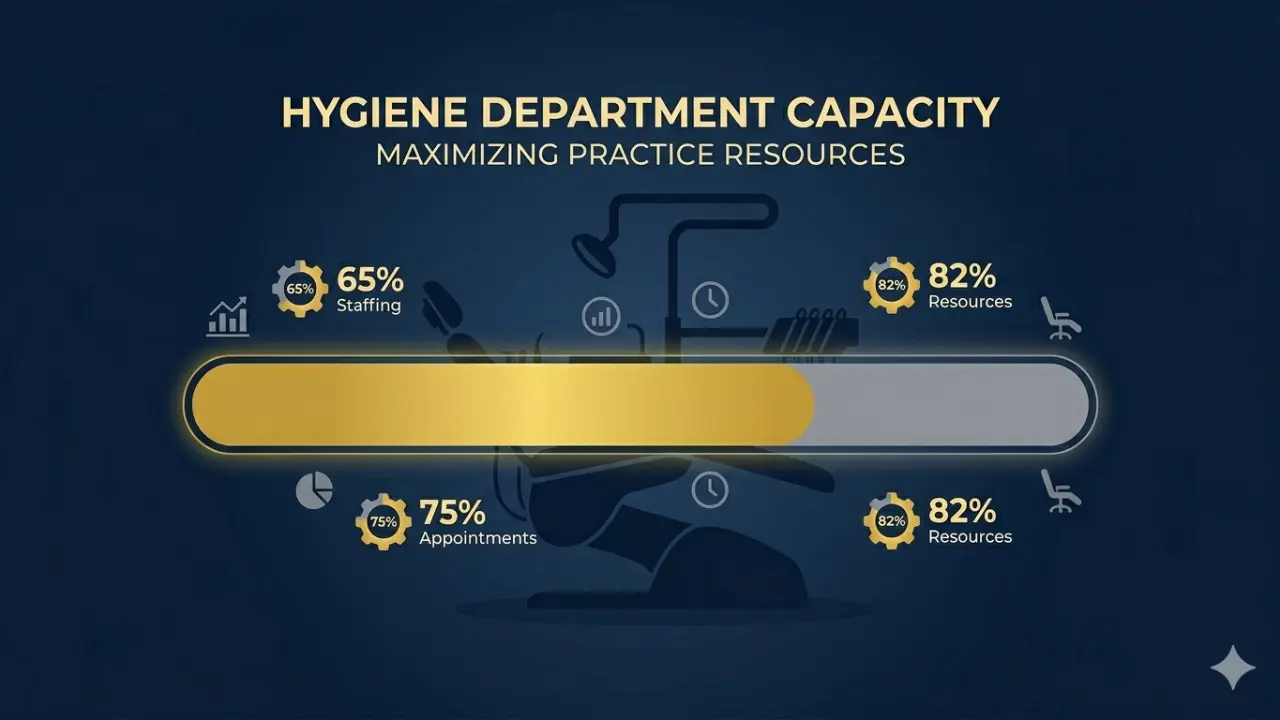
Hygiene Capacity Utilization: What the Benchmark Data Says and How to Close the Gap
What is a good hygiene utilization rate for a dental practice? See national benchmark data, understand the revenue cost of unfilled hours, and get your free scorecard.
Read →
What Is a Good Production Per Operatory Number? Dental Benchmarks Explained
What should a dental practice produce per operatory per month? Get the real benchmarks, see where your practice stands, and get a free personalized scorecard.
Read →
47% of Dental Assistants Are Thinking About Leaving. Here's What the 2026 Data Actually Says.
47% of dental assistants are considering leaving within 2 years. Every satisfaction metric declined in 2026. Here's what the data says — and what actually works to keep them.
Read →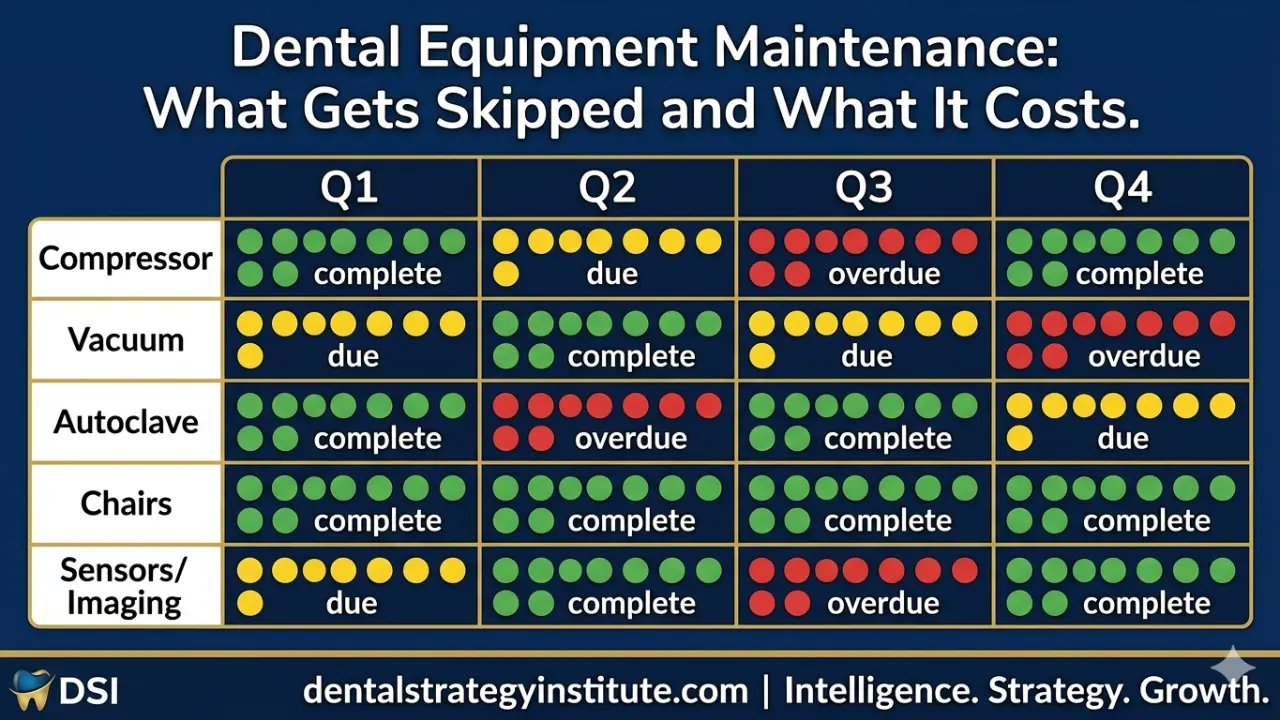
Dental Equipment Maintenance Schedules: What Gets Skipped and What It Costs
Most dental practices have a vague sense that their equipment should be serviced annually. Few have a written maintenance schedule that's actually followed. Here's what a proper PM program looks like — and what deferred maintenance costs in equipment lifespan, compliance risk, and practice value.
Read →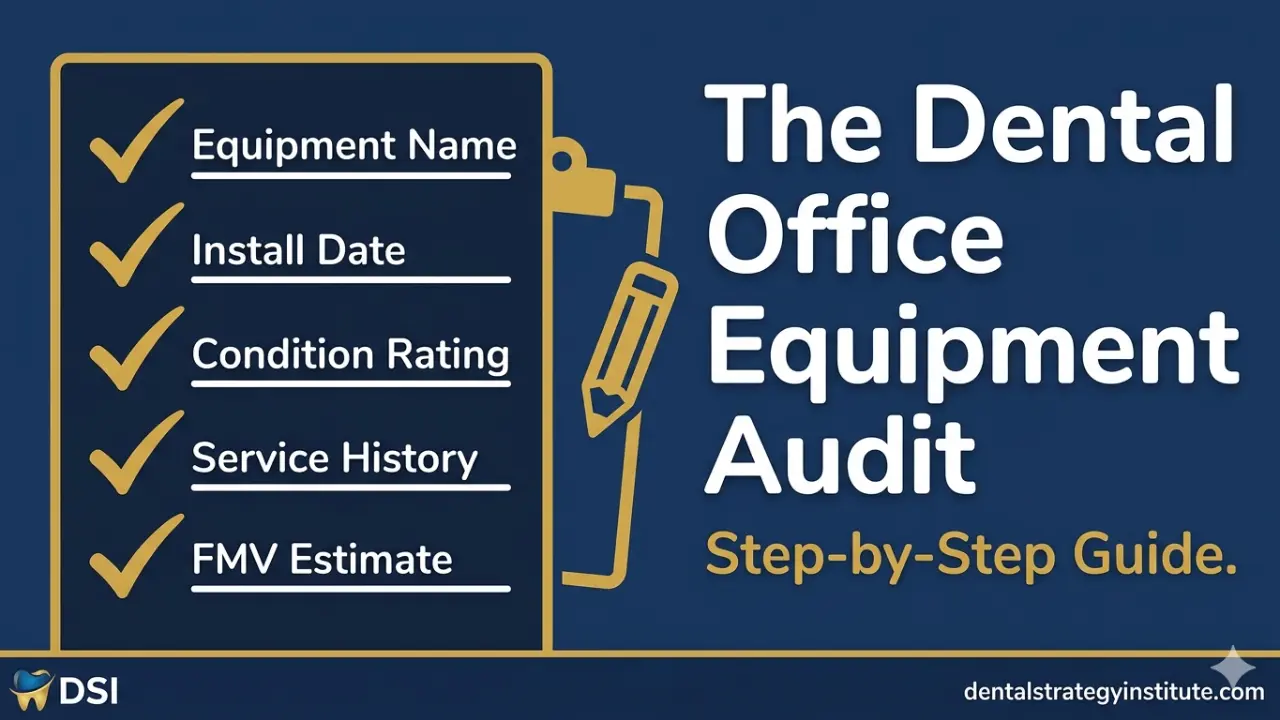
The Dental Office Equipment Audit: A Step-by-Step Guide for Practice Owners and DSO Operators
Most dental practices have never done a systematic equipment audit. They know roughly what they have and roughly how old it is — but not precisely. That imprecision costs money in transactions, compliance gaps, and reactive replacements. Here's how to do it right.
Read →