
Browse by Topic: DSO & M&A · Practice Operations · Hygiene Career Track · Practice Finance · Regulation & Compliance
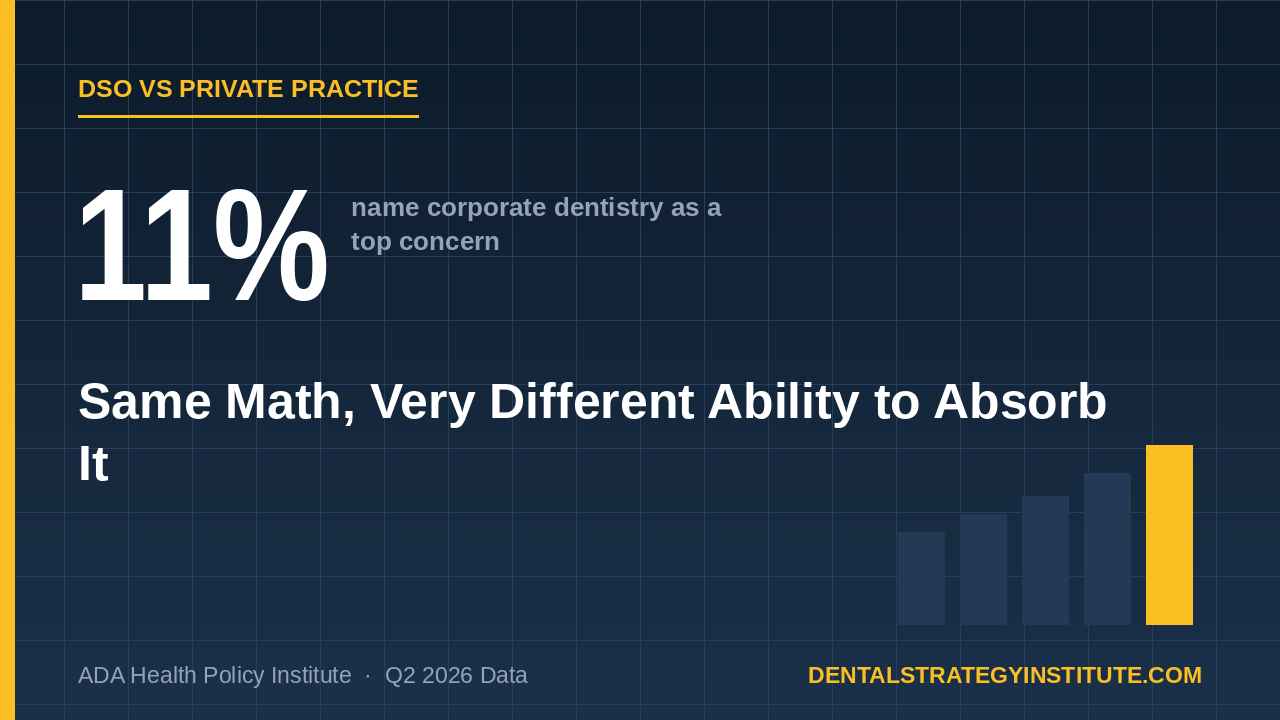
Every time the ADA publishes economic data, the comment sections split into two camps. One says the numbers prove independent practice is dying. The other says they prove corporate dentistry is overhyped and the independents are fine.
Both readings are lazy, and the Q2 2026 report is a good place to...
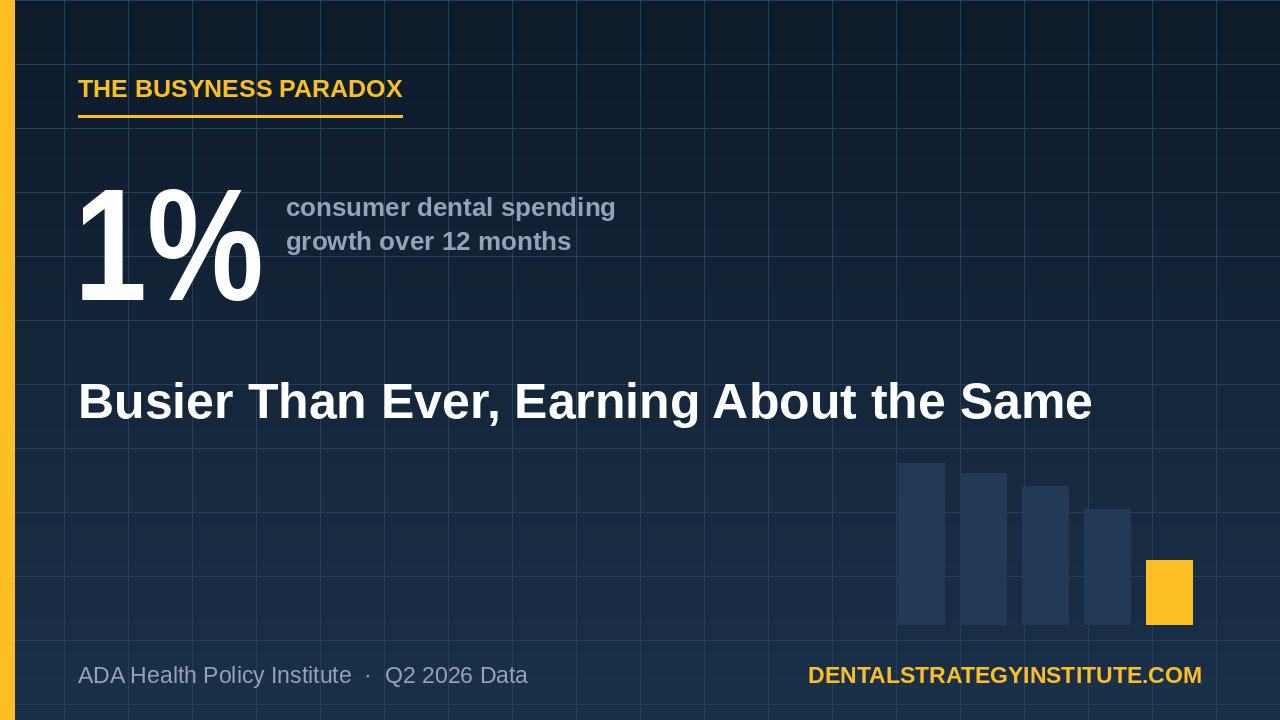
The ADA Health Policy Institute published its Q2 2026 economic report in July, and buried on slide 30 is a sentence I've been chewing on for two weeks. After laying out that dentists are busier and that consumer dental spending grew only 1% over twelve months, the authors offer three possible explan...
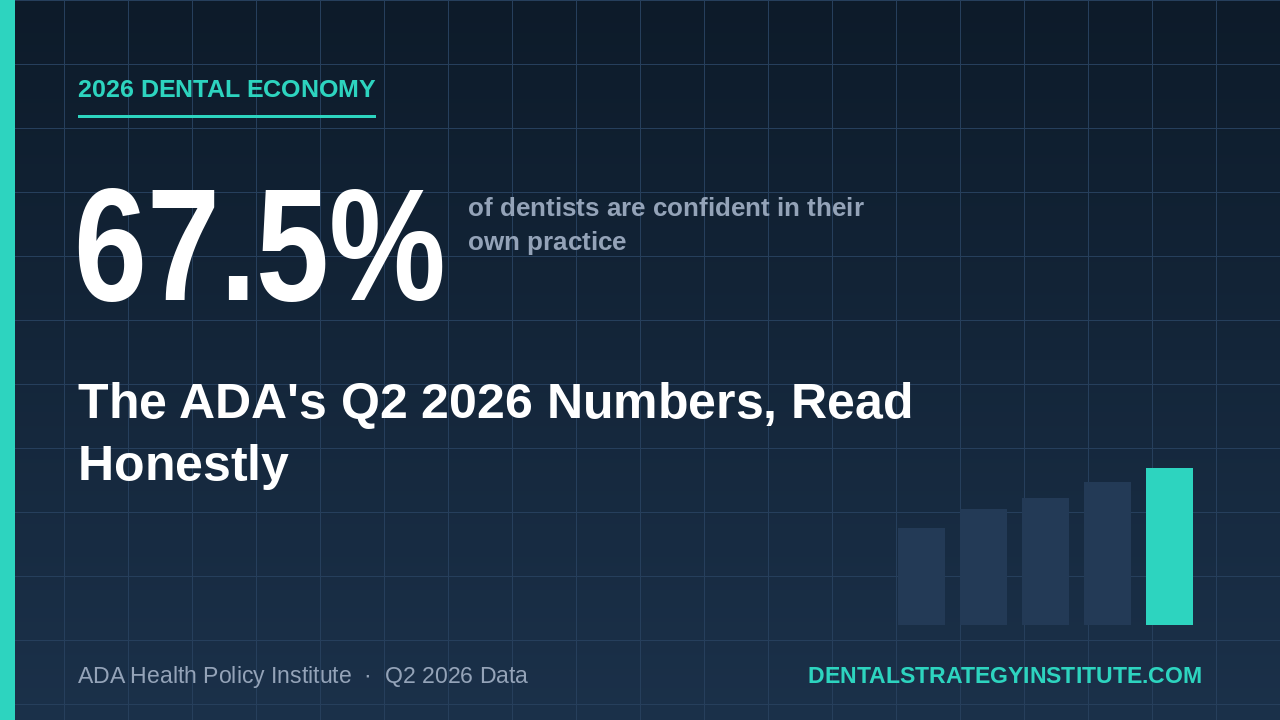
The ADA Health Policy Institute released its Q2 2026 update on the state of the U.S. dental economy in July. Forty-seven slides, four core sections, plus a new section on AI usage in dental practices.
Most of the coverage has focused on two numbers: dentist confidence is up, and 43% of dentists now...
Direct answer: the insurance versus fee-for-service question is a math problem with an ethics problem sitting on top of it. Run the write-off analysis plan by plan to find your effective hourly rate on each one. Then, separately and never in the same conversation, make sure nobody on your team is le...
Direct answer: collect 98% or more of adjusted production, keep AR over 90 days below 15% of total AR, and submit clean claims within 24 hours of the appointment. The money you lose in collections is pure margin — there's no lab bill, no chair time, no supply cost attached to it. Planet DDS calculat...

Here's the short answer: there are ten numbers that tell you almost everything about whether your practice is healthy, and most owners are tracking maybe three of them. Production. Collections. Overhead. Case acceptance. New patients. Hygiene reappointment. Cancellation rate. Production per operator...
Financing a dental office build almost always means stacking three separate loans — construction, real estate, and equipment — and the number your banker actually cares about isn't your total project cost. It's the monthly payment increase your production has to cover, starting the month the doors o...
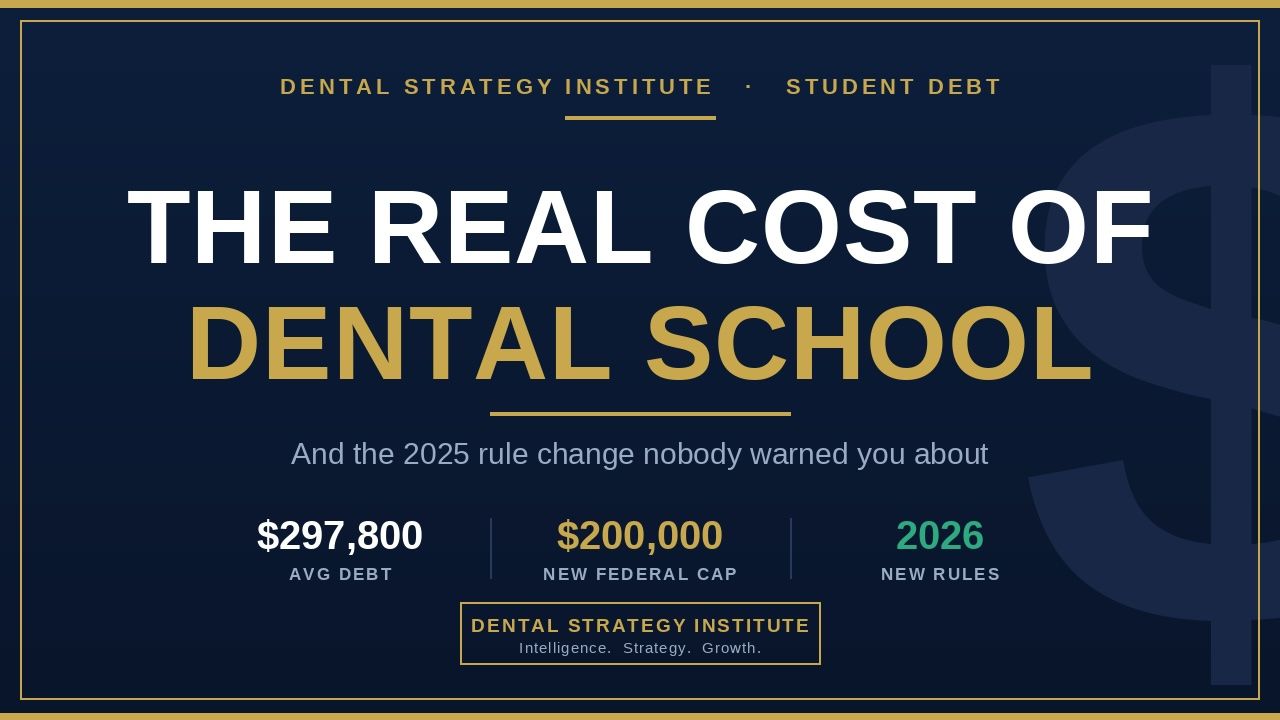
Two dentists graduate the same spring. Same school, same $300,000 balance on the day they cross the stage. Ten years later, one is debt-free with money in the bank. The other still owes more than $240,000 and hands over a fifth of every paycheck to service it.
Same start. Very different endings. And...
Opening a dental practice from scratch — a true de novo, no patient chart, no existing goodwill — costs most dentists somewhere between $650,000 and $1 million all-in in 2026, and the number that surprises first-timers isn't the construction bid. It's everything else stacked on top of it.
I've watc...
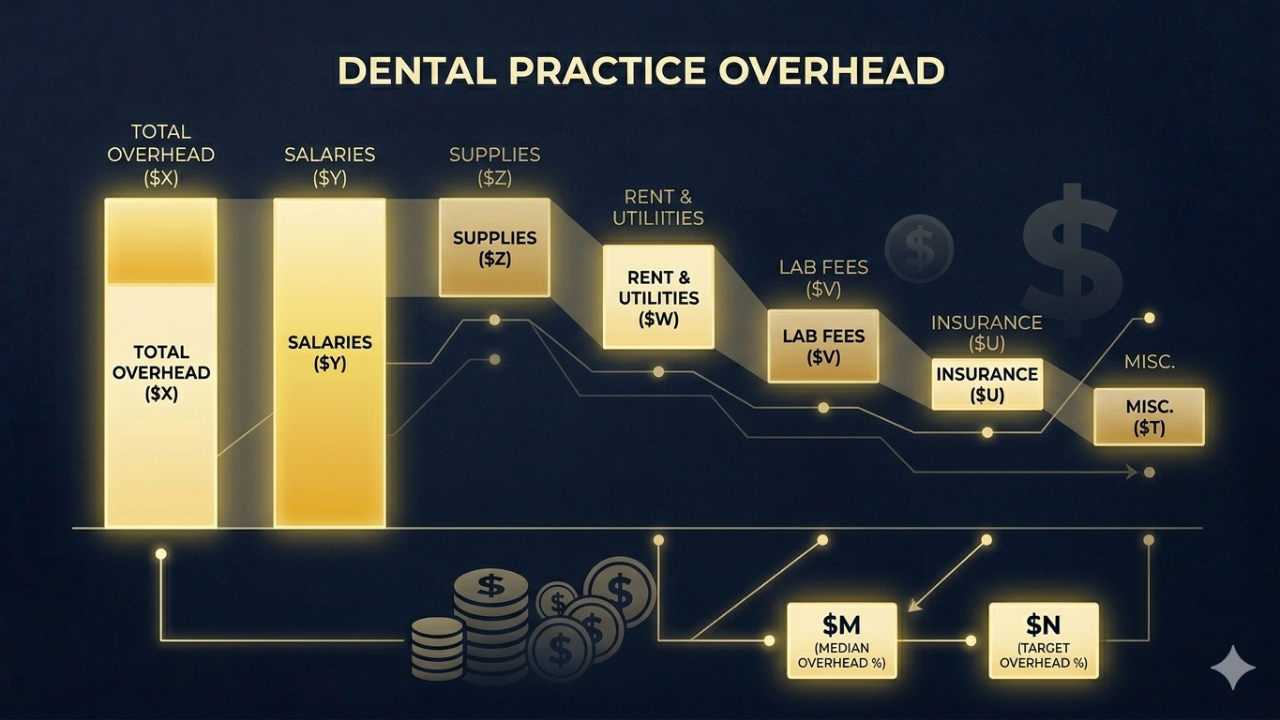
Every dollar a dental practice spends that isn't doctor compensation falls into one of six overhead categories. Most practice owners know their overhead is "too high" — but they don't know which category is the problem, or how their specific mix compares to practices like theirs.
That's the gap the...
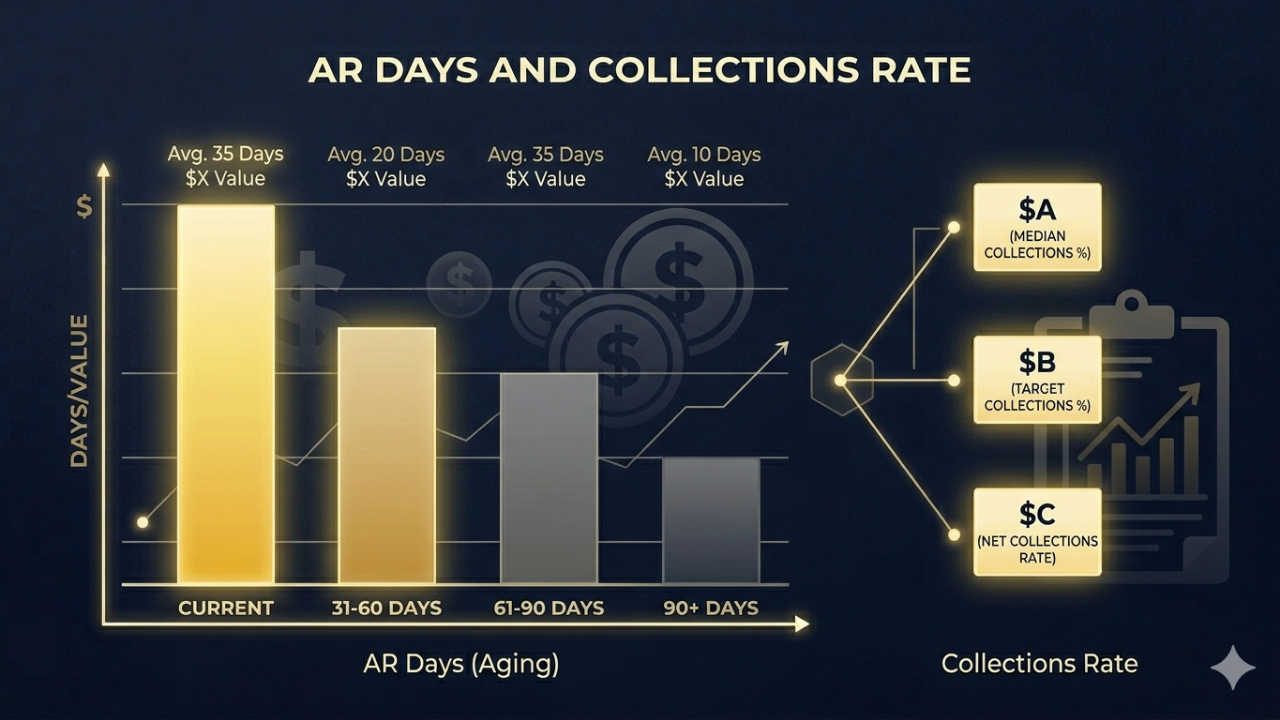
Most dental practices have an AR problem they don't fully see.
Not because they're not looking — but because the numbers on the AR aging report are accepted as fixed, when they're actually a signal. High AR days, a bloated 90+ bucket, a climbing denial rate: these aren't just administrative annoyan...
By Dental Strategy Institute | June 2026 | 6-Minute Read
Most dental practice owners think about their equipment the same way they think about their waiting room furniture: it is there, it is functional, it has a cost, and it does not need much more attention than that.
This is a mistake — and it i...