
When Can a Dental Hygienist Retire? Social Security Ages and Ways to Wind Down
When can a dental hygienist retire? Social Security claiming ages and full retirement age, why many hygienists wind down hours first, and ways to taper.
Read →
Dental Hygienist Jobs at Community Health Centers: What to Know About FQHCs and Loan Repayment
Dental hygienist jobs at community health centers: what an FQHC is, how NHSC loan repayment can apply, what postings show, and questions to ask before you accept.
Read →
Dental Hygiene Scholarships: Where Students Look for Money
Dental hygiene scholarships: the ADHA Foundation, eligibility traps, other places to look for aid, and how to apply without wasting time.
Read →
How Much Should a Dental Hygienist Save for Retirement? The 2026 Numbers
2026 retirement limits for dental hygienists: 401(k), IRA and catch-up amounts, what 10 percent of a median hygiene income grows to, and what to do without an office plan.
Read →
The Equipment-Versus-Retirement Worksheet: Seven Numbers to Run Before You Sign
A free worksheet that shows whether a new operatory adds to your retirement or costs it, using seven numbers and your own retirement age. Includes a filled-in example.
Read →
Same Chair, Three Ages: What a $22,700 Operatory Does to Your Retirement at 38, 52, and 61
The break-even on a dental operatory barely changes with your age, but the payoff and the cost of a mistake change a lot. Here's the same room bought at 38, 52, and 61.
Read →
The Deduction Trap: How Section 179 and Your Retirement Plan Compete for the Same Dollars
A Section 179 deduction returns your marginal tax rate on money you've already spent, can shrink your retirement plan room, and comes back as ordinary income at sale. Here's the math.
Read →
What Does a New Dental Operatory Cost Your Retirement? The Math Nobody Prints
A $22,700 operatory costs about $88,000 of retirement wealth if you pay cash and it never earns a dime. Here's the staffed, taxed math on when a room pays and when it doesn't.
Read →
Same-Day Dentistry by the Numbers: Intraoral Scanners, Chairside Milling, and 3D Printing
An intraoral scanner runs $20K–$37.5K, a full chairside milling workflow about $100K, and a dental 3D printer $3.5K–$12K. The break-even math for each and the order to buy them in.
Read →
CBCT and the Diagnosis Gap: When 3D Imaging Actually Pays in a General Practice
A CBCT costs $80,000–$200,000 and runs about $1,250 a month financed. Scan fees need roughly 55 scans a year to cover it; the real return comes from the cases you stop referring out.
Read →
The Sixth Room: How Few Patients It Takes for an Extra Dental Operatory to Pay for Itself
An extra operatory breaks even at about half a patient visit a week on equipment alone, and about 2.6 visits a week with a part-time assistant. Here's the full math.
Read →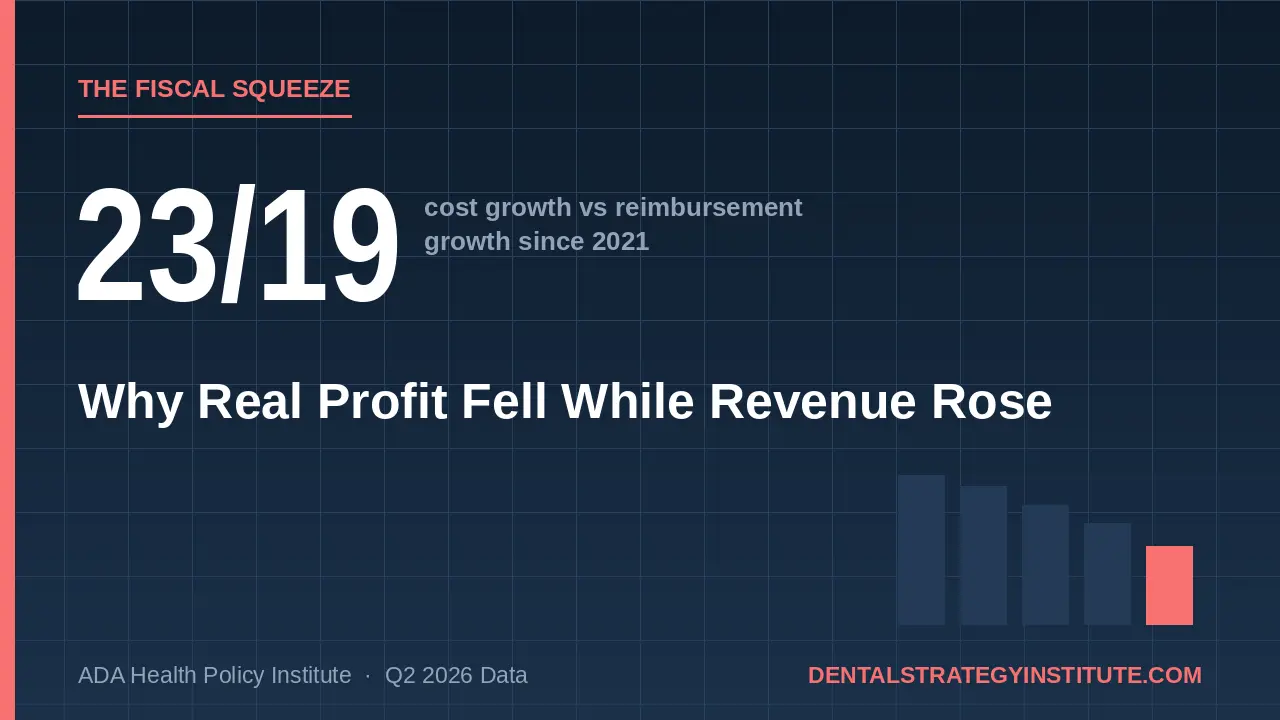
The 2026 Fiscal Squeeze: Why Your Revenue Grew and Your Real Profit Didn't
Since 2021 dental costs rose 23% while reimbursement rose 19% and inflation hit 27%. Model it through a real P&L and owner profit is down roughly 12% in real terms. The 2026 margin math, worked out step by step.
Read →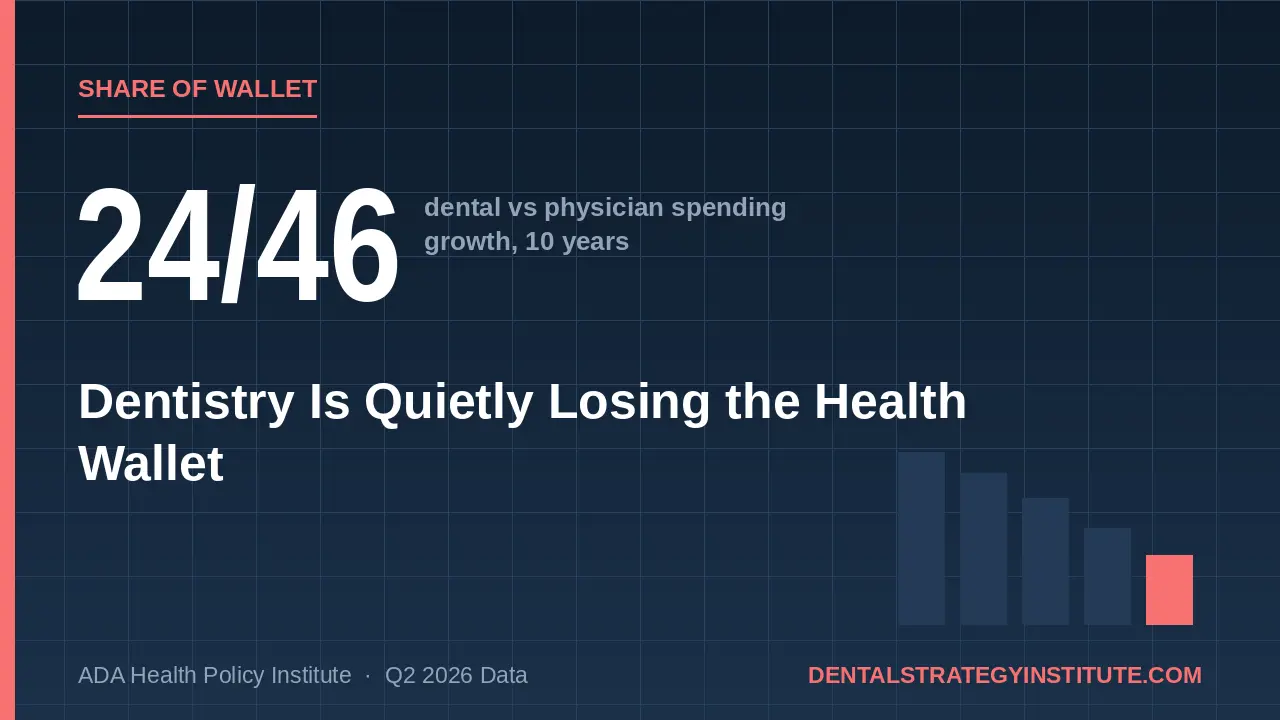
Dentistry Is Losing the Health Care Wallet, and It Has Been for a Decade
Over ten years consumer spending on physician services rose 46% and health care overall rose 39%, while dental grew just 24%. The 2026 BEA data on why dentistry keeps losing share of household health spending.
Read →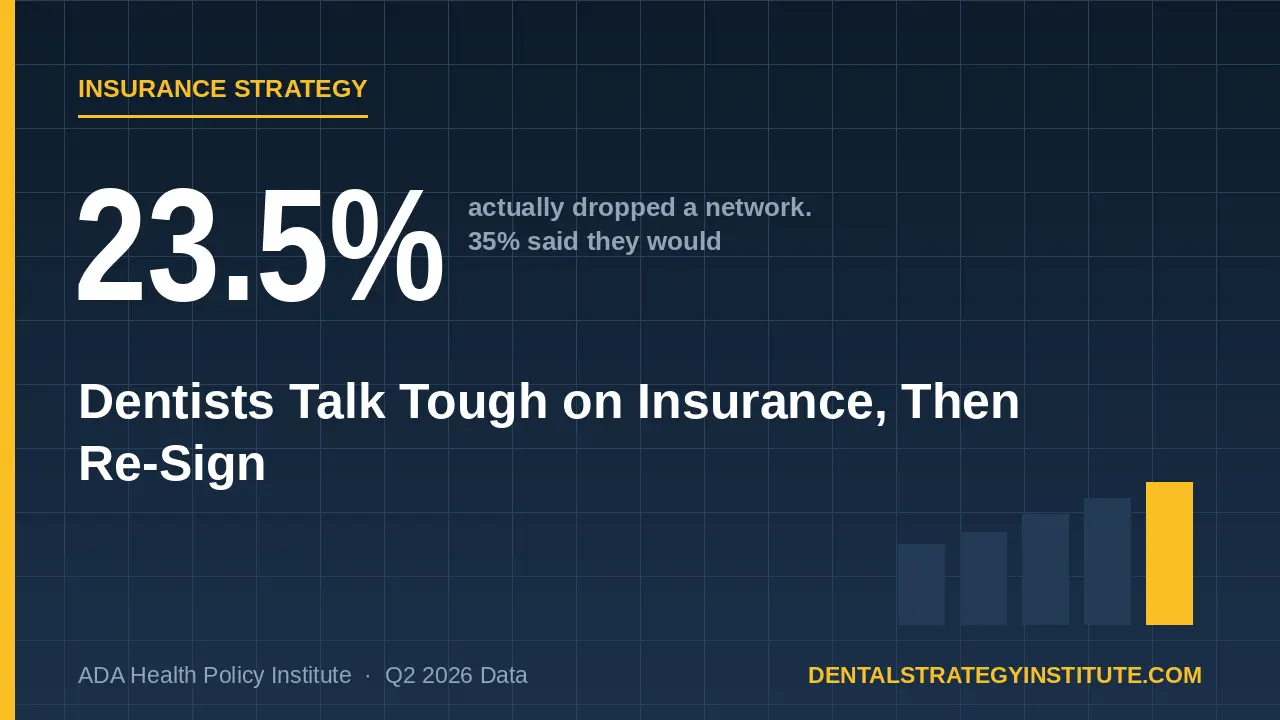
Dentists Said They'd Drop Insurance in 2026. Most of Them Didn't.
35% of dentists planned to drop insurance networks in 2026. By Q2, only 23.5% had. Meanwhile 5.6% joined networks against 3.2% who planned to. The ADA data on what dentists say about insurance versus what they do.
Read →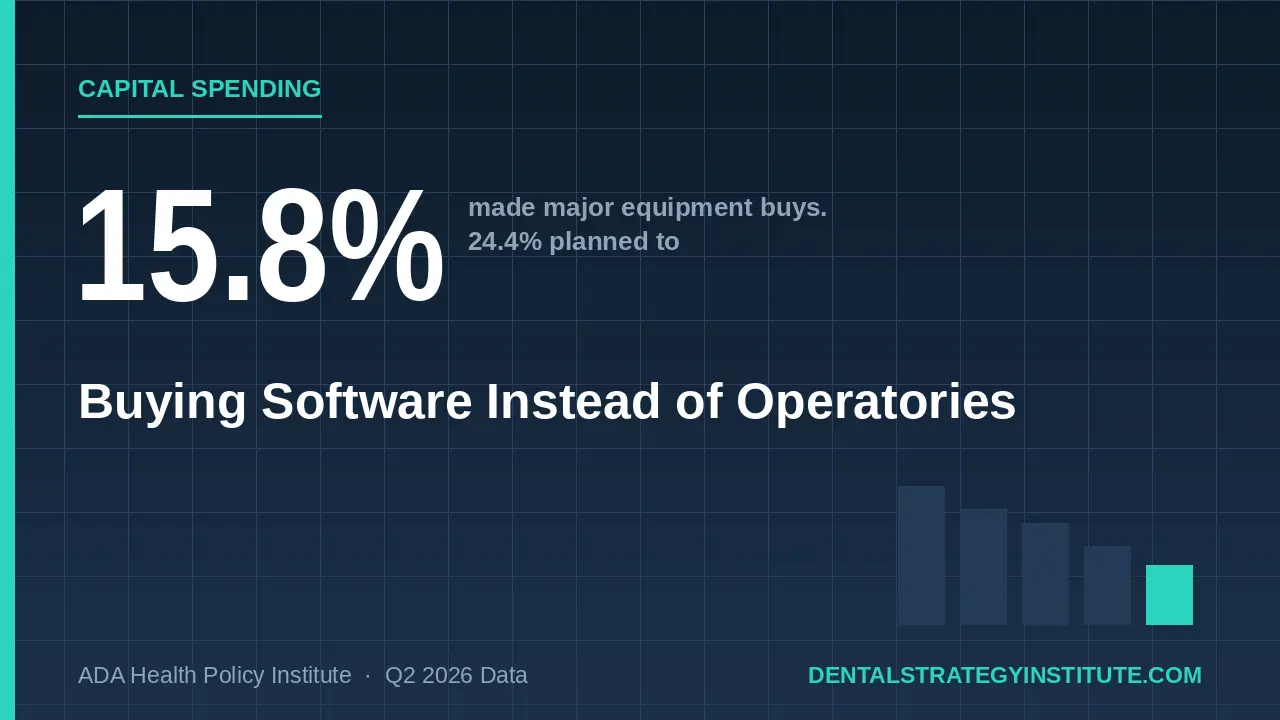
Dentists Are Buying Software Instead of Operatories in 2026
24.4% of dentists planned major equipment purchases in 2026 but only 15.8% followed through, while software investment beat plan at 17.5%. What the ADA capital spending data means for practices, DSOs and equipment suppliers.
Read →
The Pillars of Dental Strategy: A Framework for Practice Owners and DSO Operators
What dental strategy actually means, broken into six working pillars — DSO transitions, equipment, insurance, finance, regulation, and hygiene careers — with the data behind each one.
Read →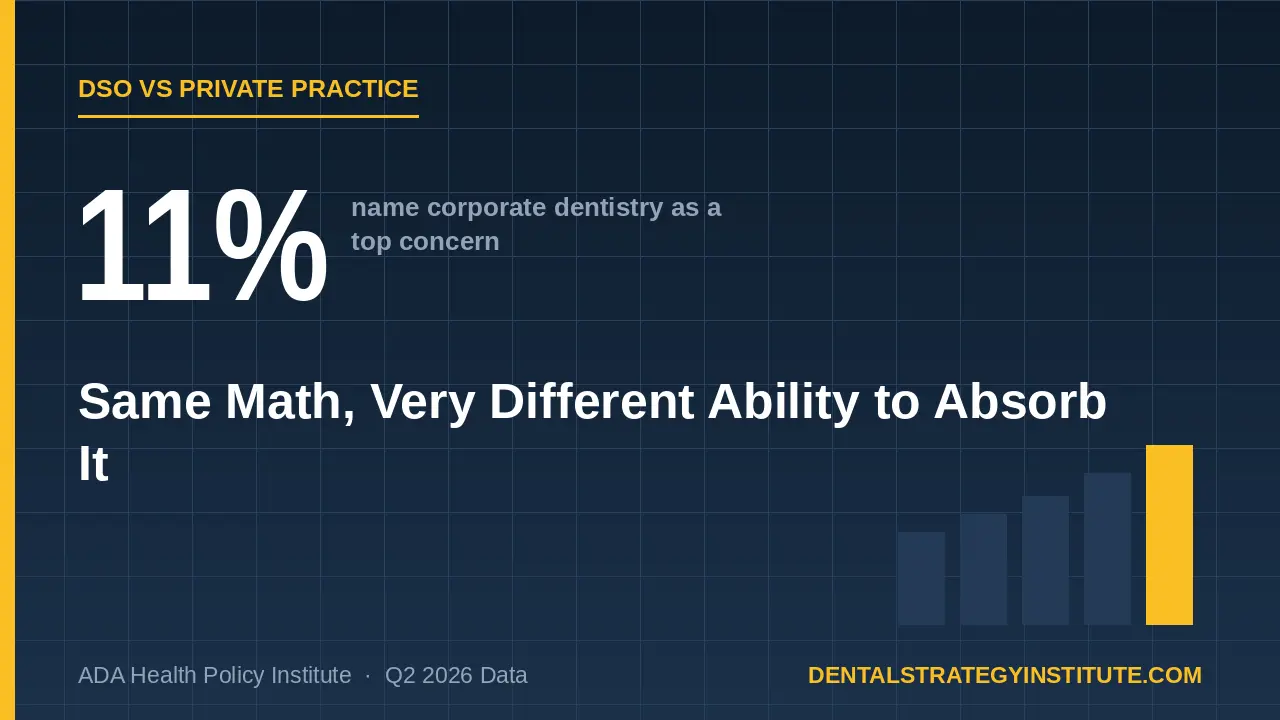
Same Squeeze, Different Shock Absorbers: Private Practice vs. DSO in 2026
The 2026 fiscal squeeze hits independents and DSOs with identical math but very different capacity to absorb it. Where the two models align, where they split, and why margin compression quietly accelerates consolidation.
Read →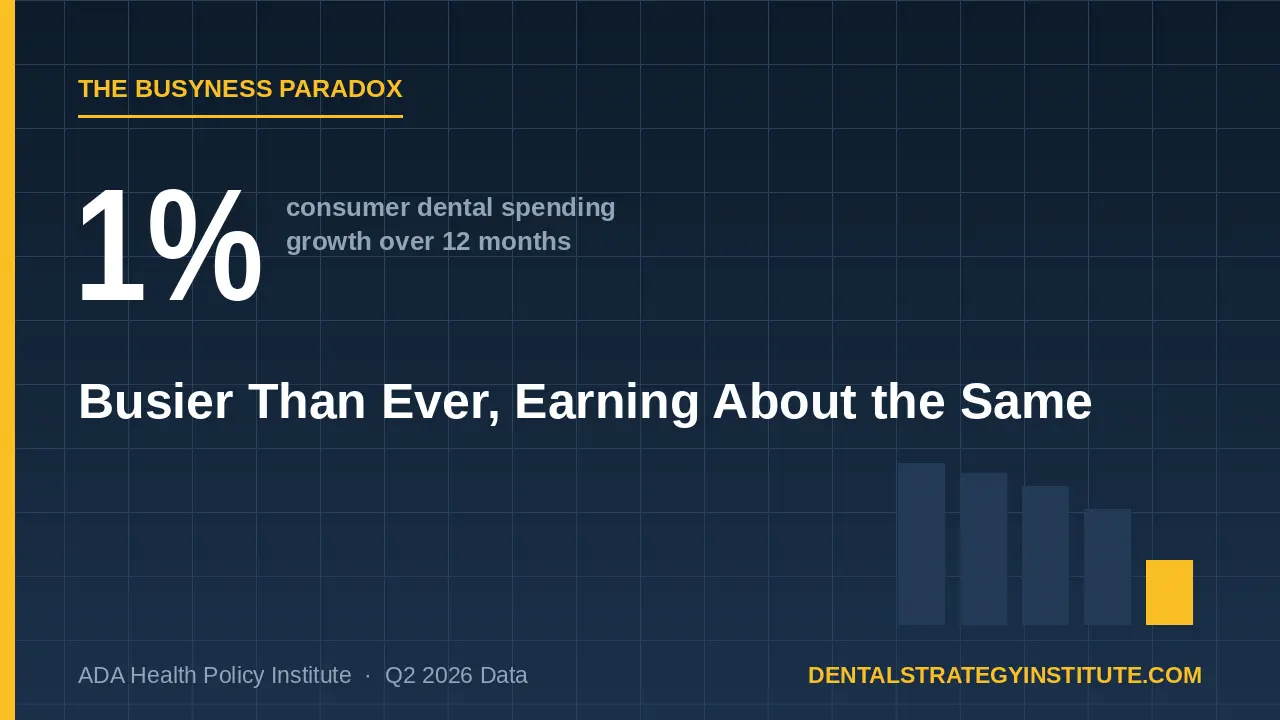
The Busyness Paradox: Dentists Are Working Harder in 2026 for the Same Money
ADA Q2 2026 data shows dentists busier and new-patient wait times at 13.9 days while consumer dental spending grew just 1% in 12 months. What that gap means for revenue per chair-hour in private practices and DSOs.
Read →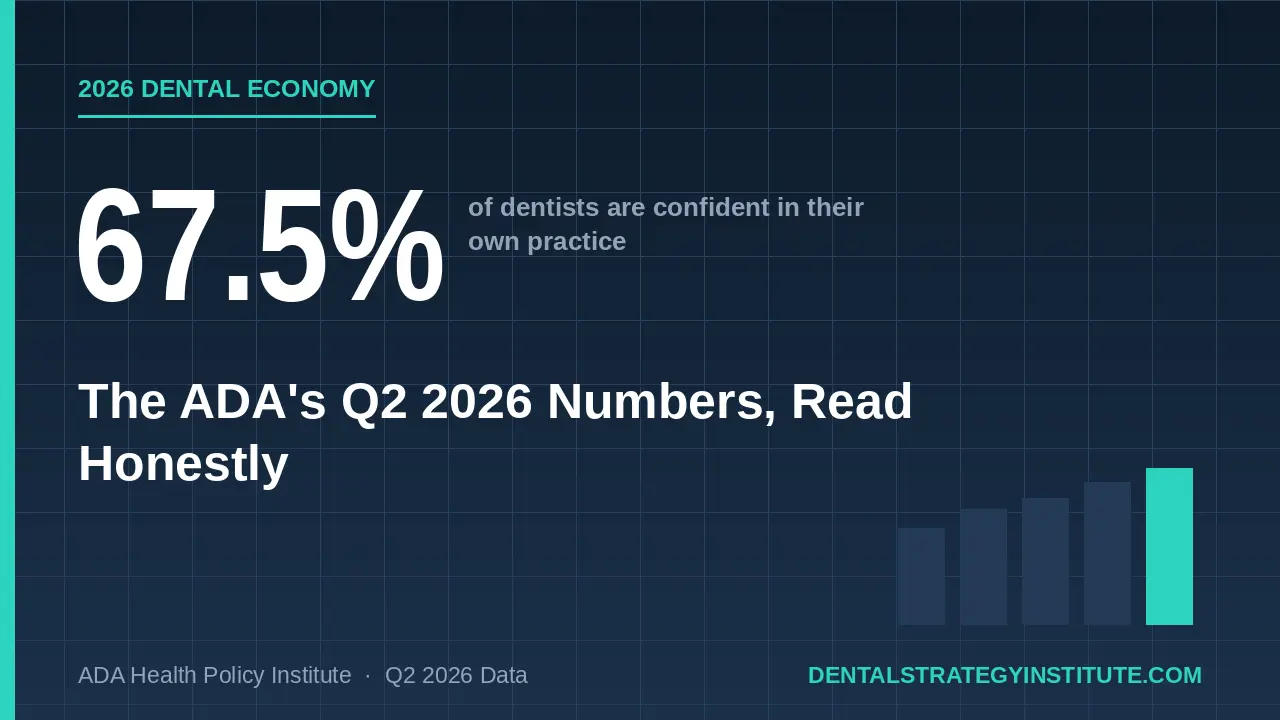
The ADA's Q2 2026 Dental Economy Report: What the Numbers Actually Say
A full breakdown of the ADA Health Policy Institute's Q2 2026 dental economy report: 67.5% practice confidence, 1% spending growth, the 23% vs 19% fiscal squeeze, 43% AI adoption, and what it all means for private practices and DSOs.
Read →
Insurance vs. Fee-for-Service: The Math and the Ethics, Kept Separate
Run the plan-by-plan write-off analysis to decide participation. Then build a wall so coverage never drives the clinical recommendation. Two conversations, kept separate.
Read →
AR and Collections: How to Collect the Money You Already Made
Collect 98% of adjusted production and keep AR over 90 days under 15%. Claims discipline, ethical patient collections, and why revenue cycle is the silent EBITDA lever.
Read →
The 10 Dental KPIs Every Practice Owner Should Know (and What Good Actually Looks Like)
The dental KPIs that actually predict profitability — collections rate, overhead, case completion, hygiene reappointment, AR aging — with 2026 benchmark data and target ranges.
Read →
How to Finance a Dental Office Build: Loans, Down Payments, and the Monthly Nut
Construction loans, equipment loans, down payments, and the monthly payment your production has to cover — how to finance a dental office build in 2026.
Read →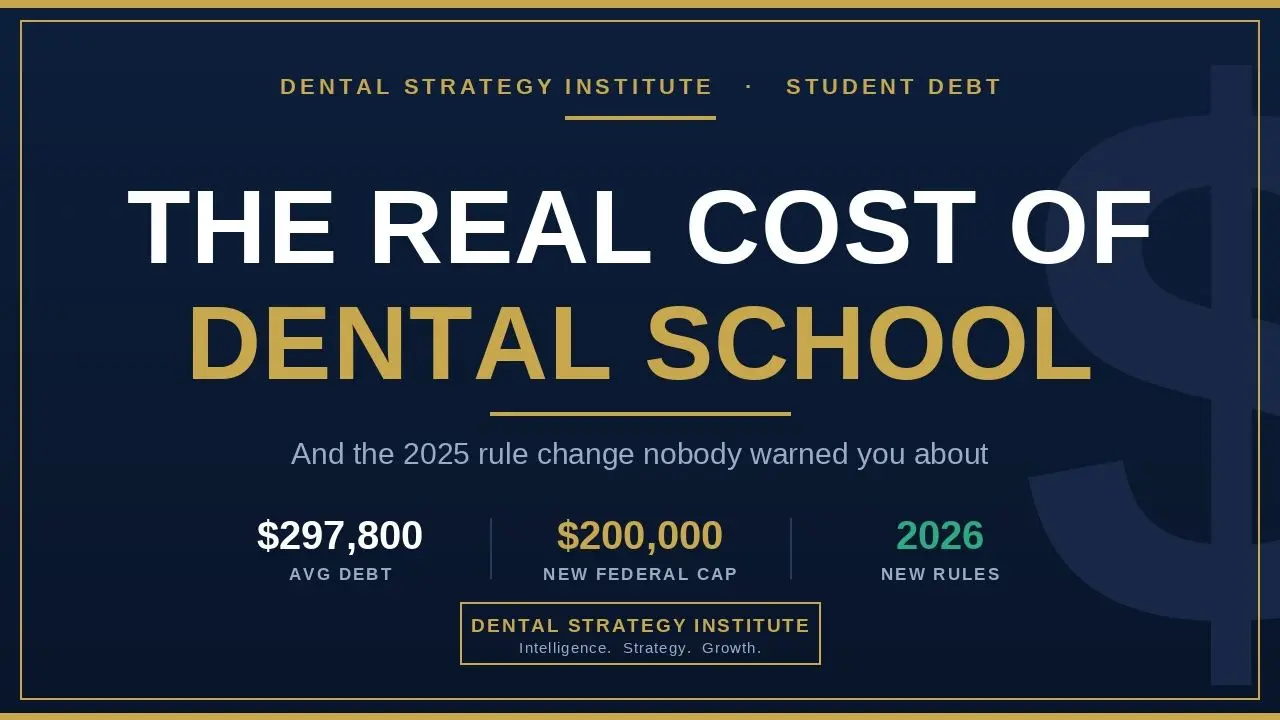
The Real Cost of Dental School in 2026 (and the Rule Change Nobody Warned You About)
Dental school now costs $300k-$450k, and the 2025 loan law capped federal borrowing at $200k for professional students. Here is what it means, plus a free calculator to run your numbers.
Read →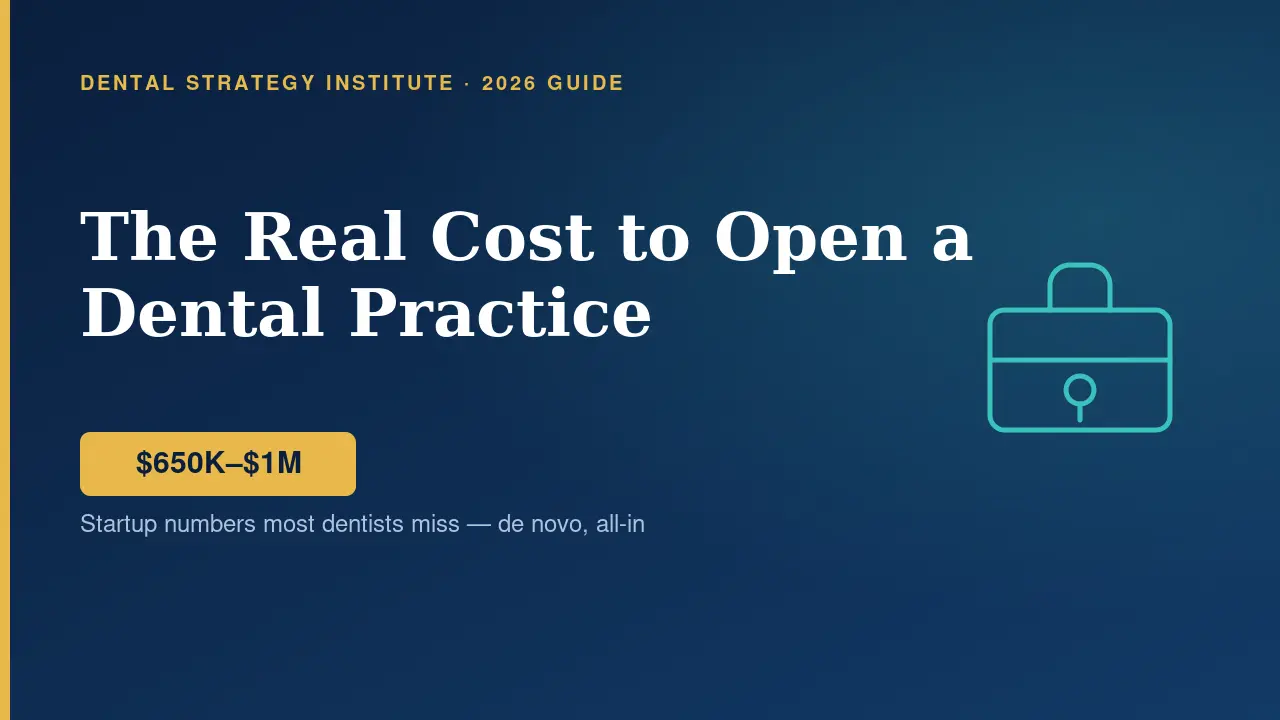
The Real Cost to Open a Dental Practice (and the Startup Numbers Most Dentists Miss)
The true, all-in cost to open a dental practice from scratch in 2026 — build-out, equipment, working capital, and financing — with a free calculator.
Read →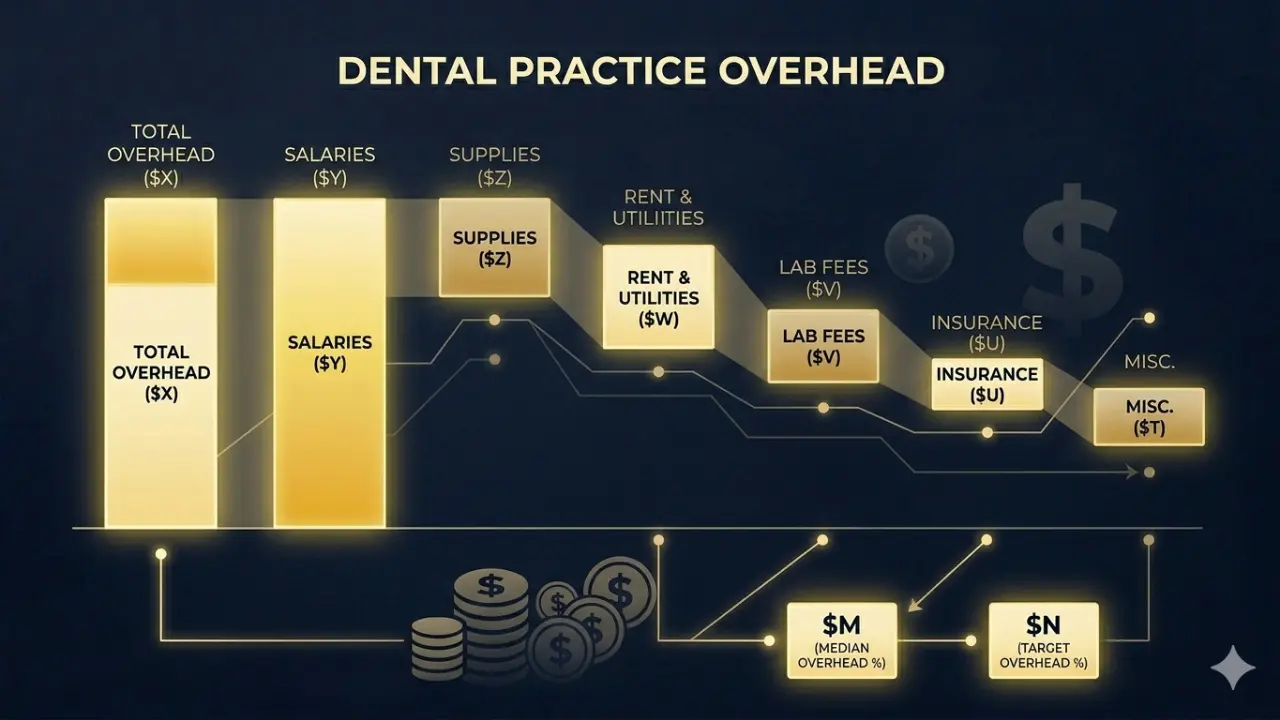
What Should Dental Practice Overhead Be? Benchmark Data Across All Six Cost Categories
What should dental practice overhead be? See national benchmark data across six overhead categories — occupancy, supplies, lab, marketing, and more — by percentile for GP practices.
Read →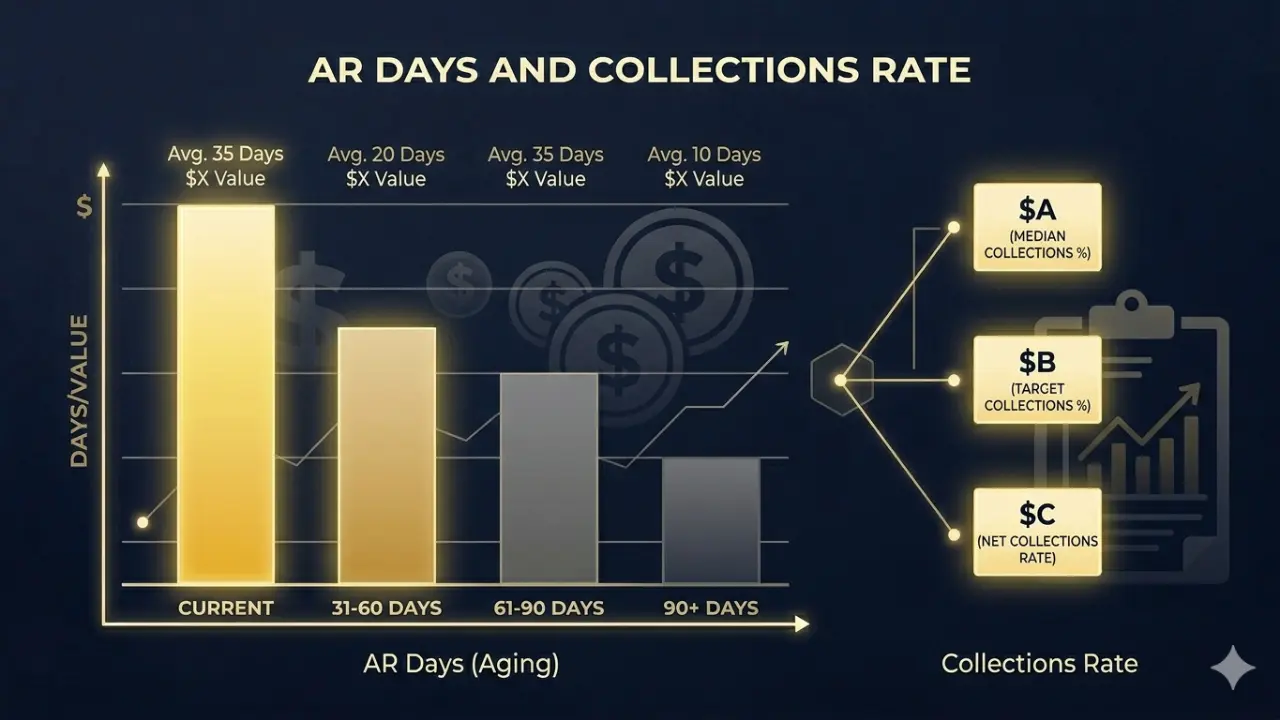
Dental AR Days and Collections Rate: What the Benchmark Data Says and How to Fix Both
What are good AR days and collections rate benchmarks for a dental practice? See national data by percentile and calculate how much revenue is sitting in your 90+ day AR bucket.
Read →
Your Dental Equipment Is an Asset. It's Time to Treat It That Way.
Your dental chairs, CBCT, and imaging suite have a Fair Market Value that's often $75,000–$200,000 higher than your depreciation schedule shows. Here's what that gap costs you — and how to close it.
Read →DSO vs. Solo Practice: The Financial Comparison No One Puts in Plain Language
Joining a DSO or staying independent? Here's the financial comparison most dentists never see until it's too late to use it.
Read →What EBITDA Actually Means in a Dental Practice — and Why Your Tax Return Doesn't Show It
EBITDA is the number that determines your practice's value in a DSO deal. Here's exactly what it means, how to calculate it, and why your tax return isn't telling you the whole story.
Read →The Real Cost of Staying In-Network: How to Run a PPO Profitability Analysis on Your Own Practice
Most dentists know PPOs are expensive. Few know exactly how expensive. Here's how to run a real PPO profitability analysis — and what to do with the results.
Read →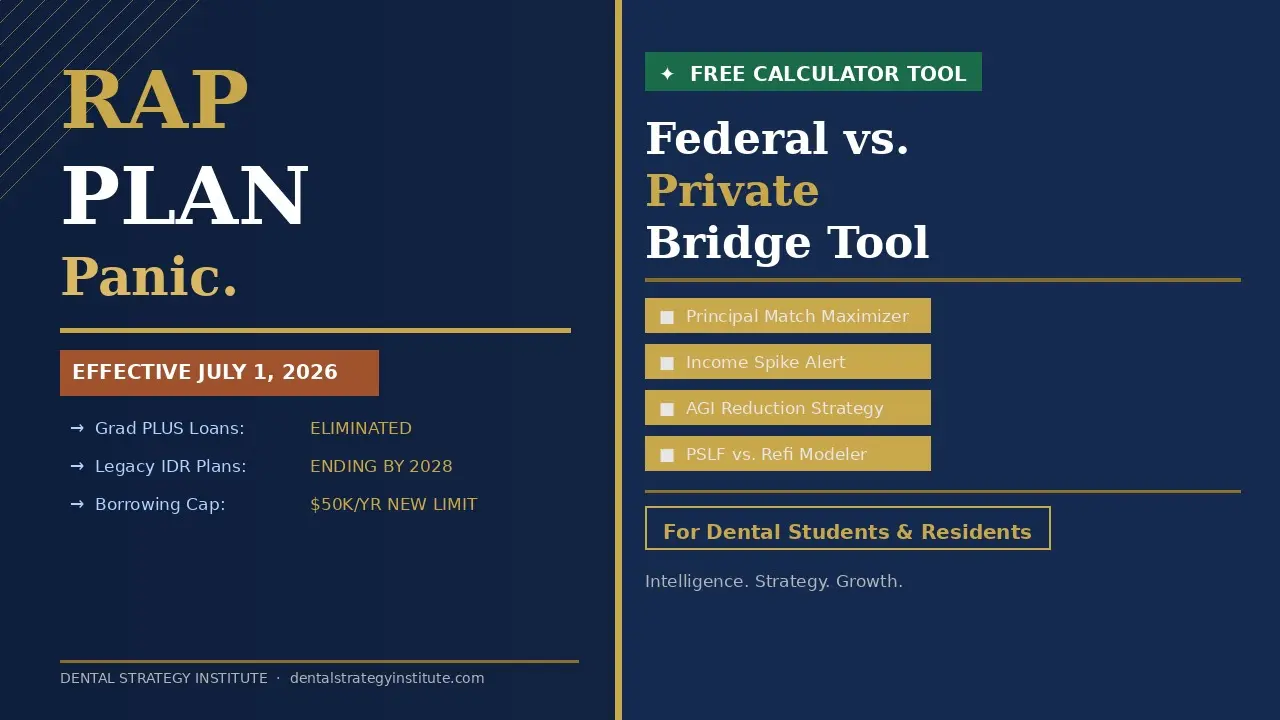
The RAP Plan Panic: What Every Dental Student Needs to Know Before July 1
July 1, 2026 reshaped federal loan repayment for dental students. See how the new RAP plan works, the payment-spike trap, and 3 numbers to know before you borrow.
Read →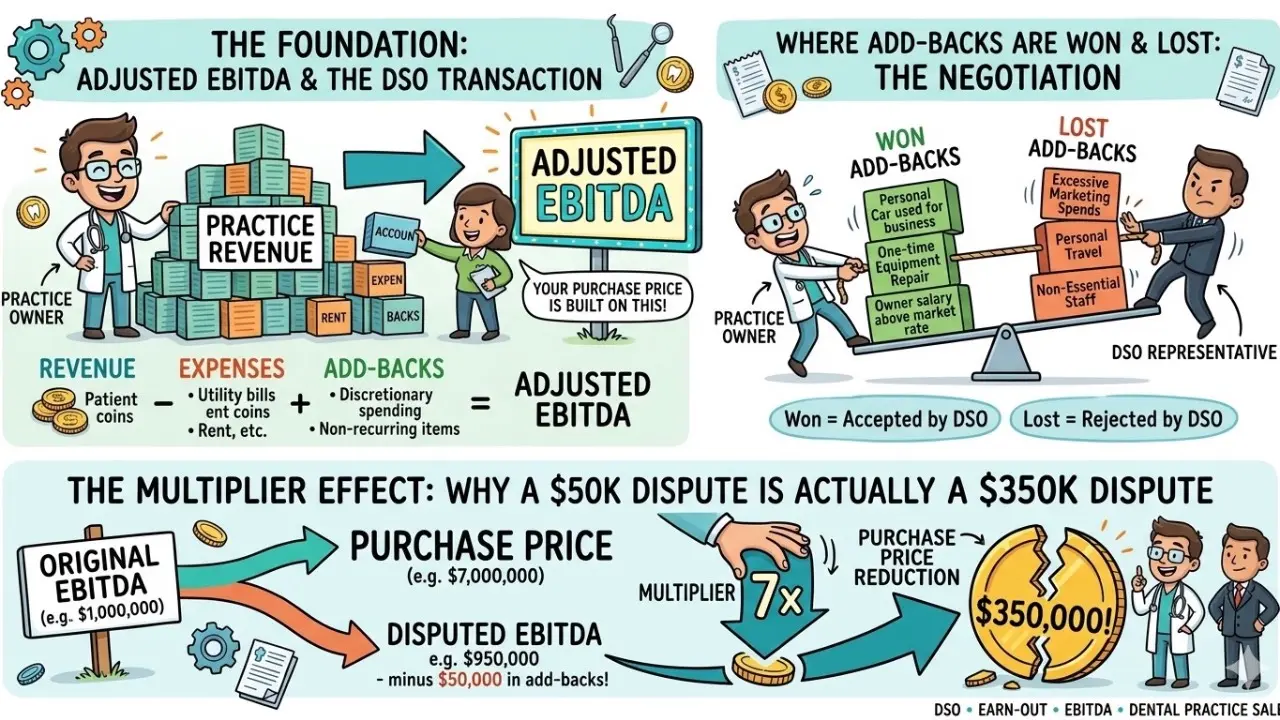
What Is Adjusted EBITDA in a Dental Practice Sale — and Why Every Add-Back Is Worth Seven Times Its Value
In a DSO transaction, adjusted EBITDA is the number your purchase price is built on. Here's how it's calculated, where add-backs are won and lost, and why a $50,000 dispute is actually a $350,000 dispute.DSO, earn-out, EBITDA, dental practice sale, DSO transaction
Read →Dental Hygienists & Business Economics: Driving Practice Revenue
Hygiene drives 25–35% of a typical dental practice's production. Here's what that means for hygienists — in pay talks, in career moves, and in how you read your own schedule.
Read →