
Browse by Topic: DSO & M&A · Practice Operations · Hygiene Career Track · Practice Finance · Regulation & Compliance
Most dentists negotiate harder on a used car than on the equipment that runs their practice for the next ten years.
Let's answer the question first. At 2026 manufacturers' suggested retail, the core equipment for one operatory (chair, upholstery, delivery unit, assistant's instrumentation, and LED ...
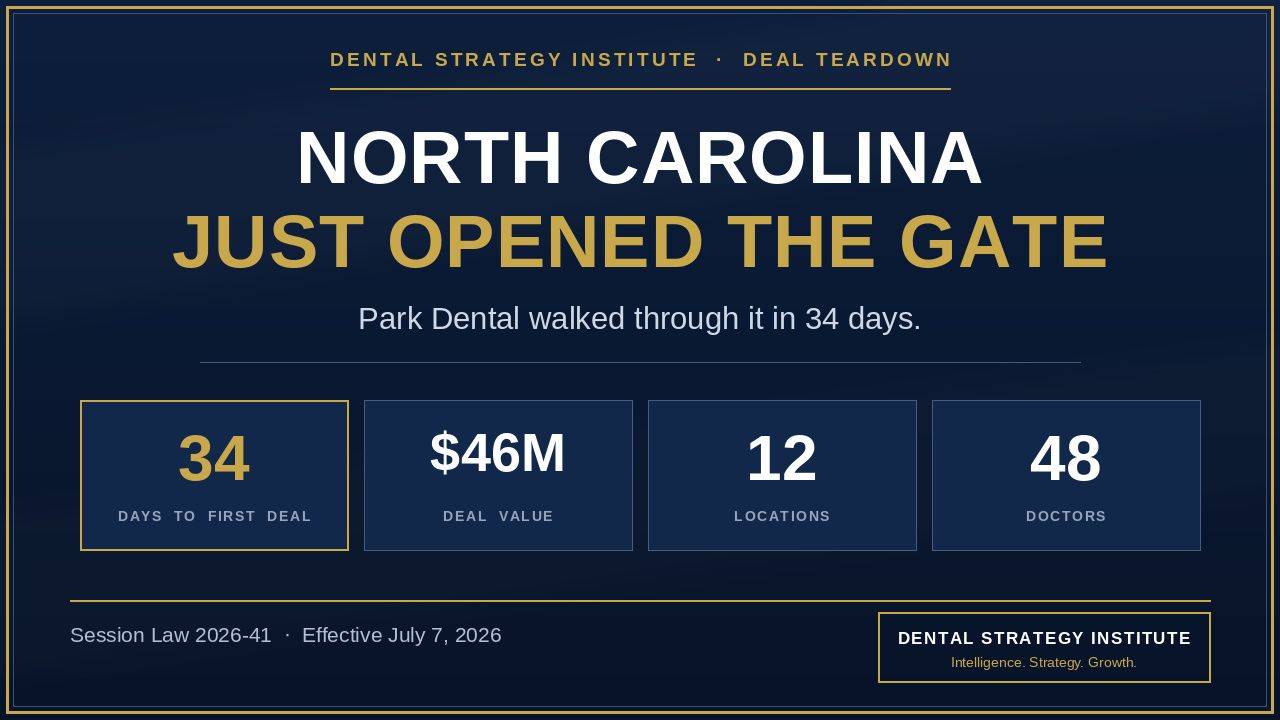
Thirty-four days.
That's how long it took. North Carolina's new law killing the dental board's pre-approval requirement for management agreements took effect on July 7, 2026. On August 10, Park Dental Partners announced it was buying Village Family Dental — twelve locations, forty-eight doctors, ea...
Dental strategy is the set of financial, operational, and regulatory decisions that determine whether a dental practice survives, scales, or gets sold on someone else's terms. It breaks into six working pillars: practice transitions and DSO affiliation, equipment as a capital asset, insurance and re...
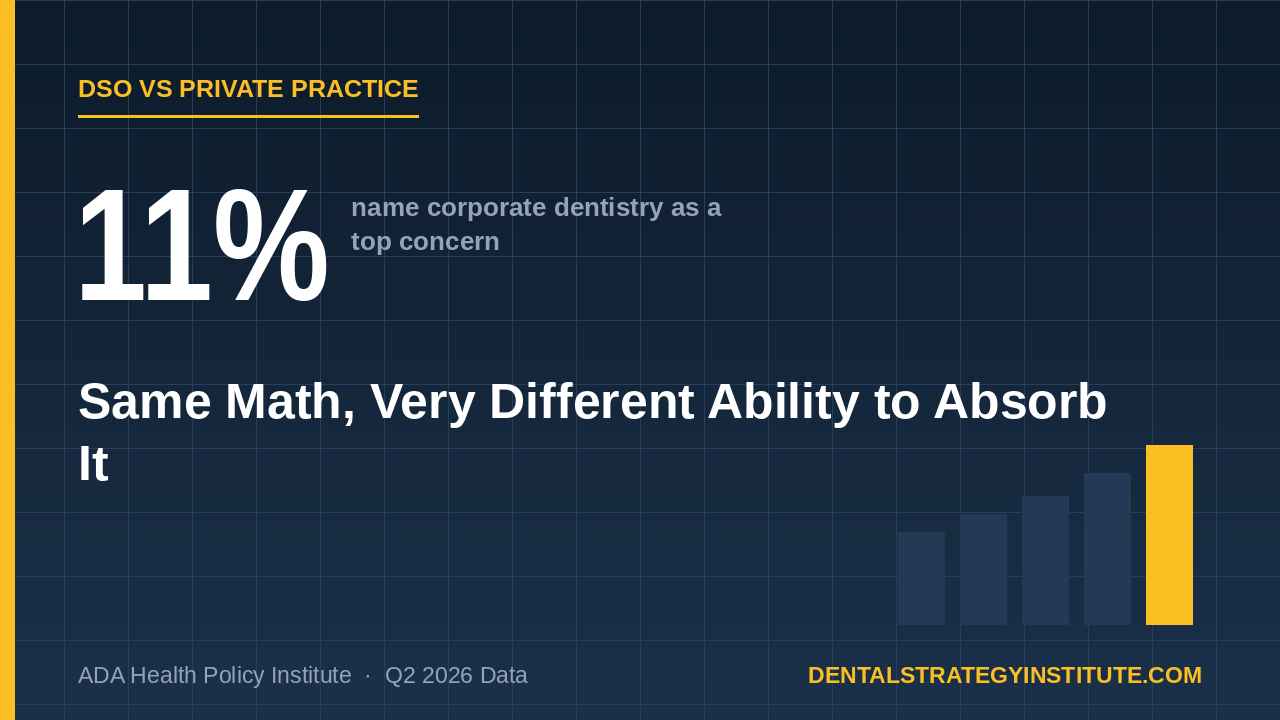
Every time the ADA publishes economic data, the comment sections split into two camps. One says the numbers prove independent practice is dying. The other says they prove corporate dentistry is overhyped and the independents are fine.
Both readings are lazy, and the Q2 2026 report is a good place to...
Henry Schein put out a tidy little announcement this week about a new leadership structure. They're creating something called the Henry Schein Leadership Team to replace the old Executive Management Committee, folding the global supply chain group into distribution, and three long-serving executives...
By Pete Volk, founder of Dental Strategy Institute.
North Carolina just eliminated its requirement that DSOs get advance approval from the State Board of Dental Examiners before signing a management agreement. Under Session Law 2026-41, enacted July 7, 2026, parties can now execute a management arra...
A dental lab’s value comes down to seven factors, and revenue is only one of them. Buyers price EBITDA margin, client concentration, owner dependency, digital infrastructure, quality systems, team stability, and market positioning into the multiple they’re willing to pay — and that multiple can swin...
Twenty-some healthcare attorneys have now written some version of "what Colorado's DSO rules mean for your practice." Almost none of them have stepped back to ask the more useful question: is Colorado actually unusual, or is it just the first state to finish what a lot of other states already starte...
Every DSO operator with a Colorado footprint is asking some version of the same question right now: do we pause? Stop signing LOIs, stop closing deals, wait until January 1, 2027 passes and the dust settles?
No. But the reasoning behind that "no" matters more than the answer itself, and it's not the...
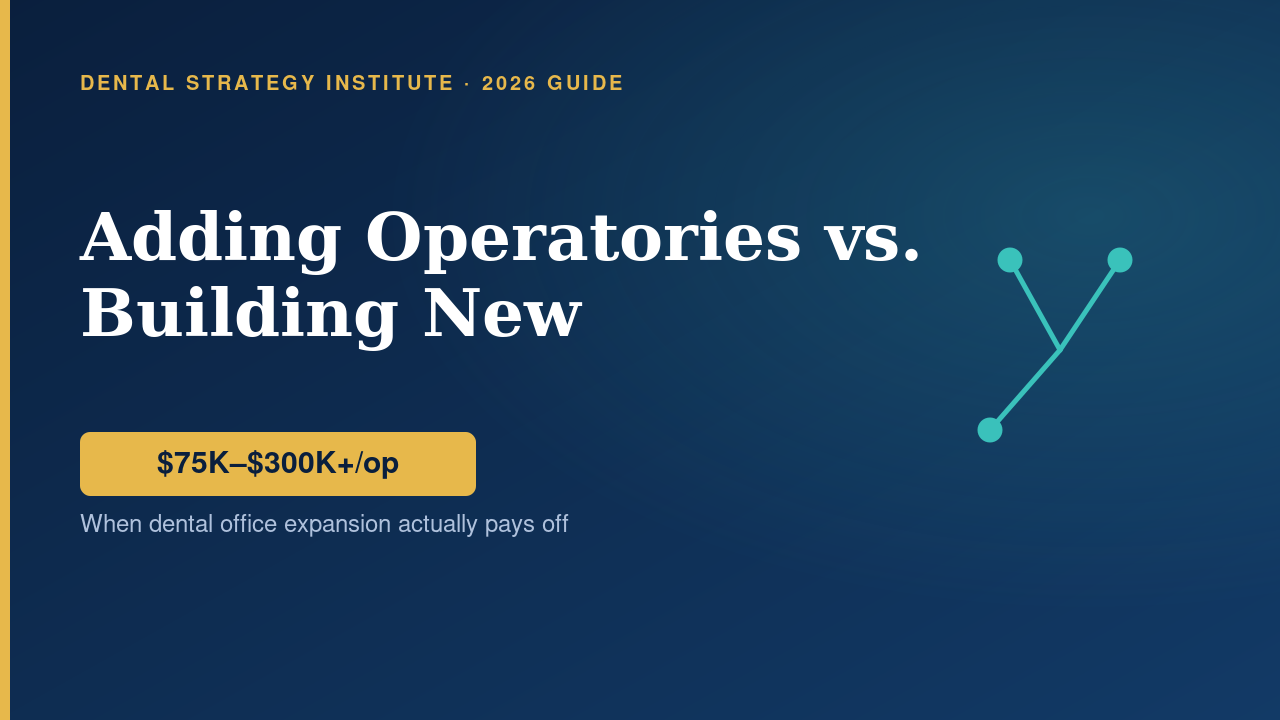
Adding an operatory to an existing practice typically costs $75,000 to $175,000 for a full comprehensive build, or $35,000 to $80,000 per room before equipment if you're doing a leaner renovation into already-plumbed space. Building new runs the full construction cost we cover in the pillar guide — ...
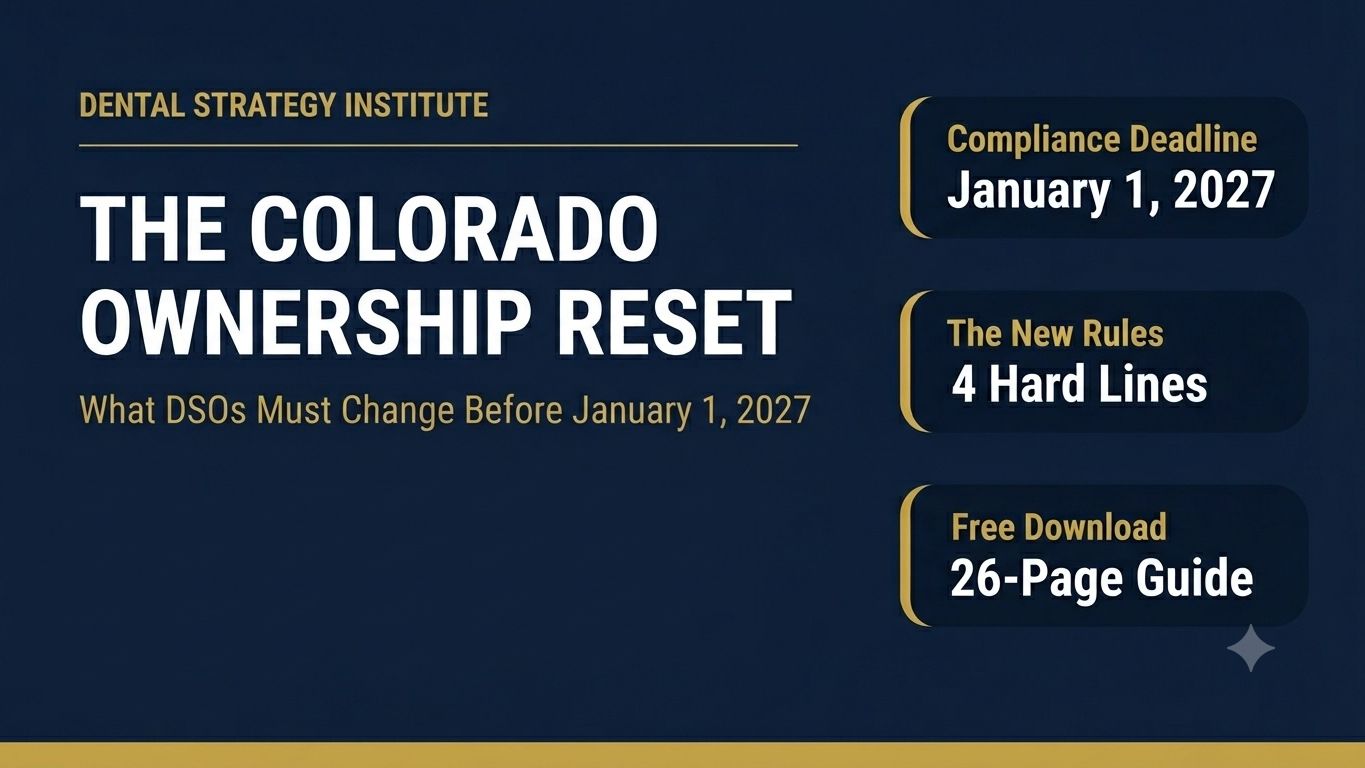
Most of what's circulating about Colorado's new dental rules is wrong in one direction or the other. Either someone is calling it a ban on DSOs — it isn't — or someone is waving it off as business as usual. It isn't that either.
Here's what actually happened, what it means for your structure, and wh...

By Dental Strategy Institute | June 2026 | 8-Minute Read | For DSO Operators and Group Practice Leaders
The DSO model had a run in the early 2020s that looked, in retrospect, like a period where almost anything worked. Low interest rates made debt cheap. Private equity was aggressive. Multiples exp...